The global shift toward sustainable energy has placed the 375w solar panel at the center of residential and commercial energy transitions. As nations strive to meet the carbon neutrality goals outlined by the Paris Agreement, the demand for high-efficiency, mid-range power modules has surged, providing a balanced approach to energy independence. Understanding the technical nuances of these panels allows homeowners and developers to maximize their Return on Investment (ROI) while reducing their ecological footprint.
From an industrial perspective, the 375w solar panel represents a "sweet spot" in photovoltaic engineering, blending manageable physical dimensions with a power output capable of sustaining modern household appliances. With the International Energy Agency (IEA) reporting a massive increase in solar capacity worldwide, the standardization of such modules ensures that installation processes are streamlined and compatibility with various inverters is maintained.
However, choosing the right module requires more than just looking at the wattage. Factors such as cell type, temperature coefficients, and degradation rates determine whether a 375w solar panel will perform optimally in a scorching desert or a temperate coastal region. This comprehensive guide explores everything from the core components to the future innovations driving this specific solar technology forward.
Global Industry Context of 375w Solar Panels
The proliferation of the 375w solar panel mirrors the broader global trend of decentralizing energy grids. In many developing nations, where traditional infrastructure is lacking, these panels provide a scalable solution for rural electrification. By leveraging standardized power outputs, NGOs and governments can deploy solar arrays that are predictable in their energy yield and easier to maintain across vast geographic distances.
Furthermore, the industrial shift toward Monocrystalline PERC (Passivated Emitter and Rear Cell) technology has made the 375w output more achievable within smaller frames. This increase in energy density means that fewer panels are required to reach a target kilowatt capacity, significantly reducing the labor costs associated with racking and installation.
Defining the 375w Solar Panel Standard
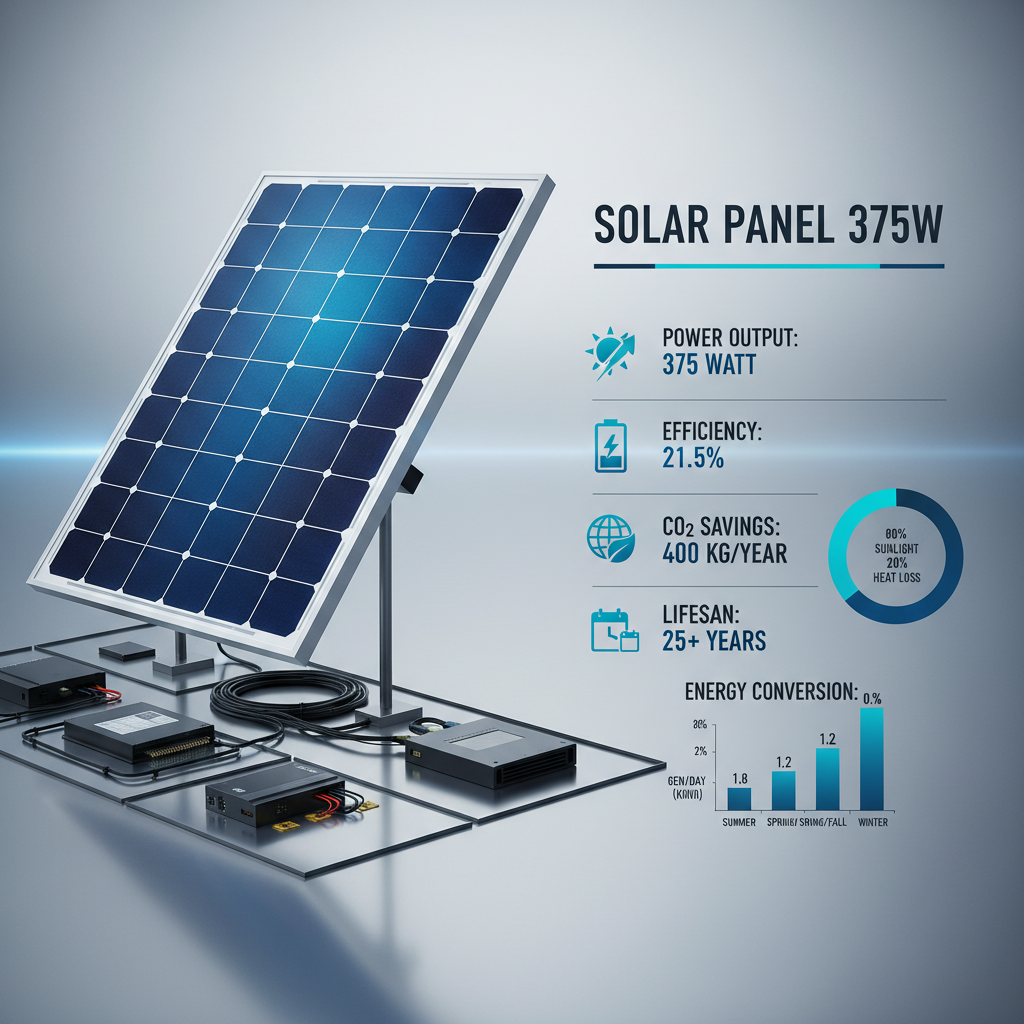
At its most basic level, a 375w solar panel is a photovoltaic module designed to generate 375 watts of direct current (DC) electricity under Standard Test Conditions (STC), which typically include an irradiance of 1000W/m² and a cell temperature of 25°C. This wattage classifies it as a high-efficiency module suitable for both residential rooftops and small-to-medium commercial installations.
Beyond the numbers, this specific power rating represents a bridge between legacy low-wattage panels and the ultra-high-capacity industrial modules. It is particularly vital for "off-grid" living and humanitarian aid, where the balance between transportability and power generation is critical. A 375w unit is light enough for manual installation but powerful enough to run essential lighting, refrigeration, and communication devices.
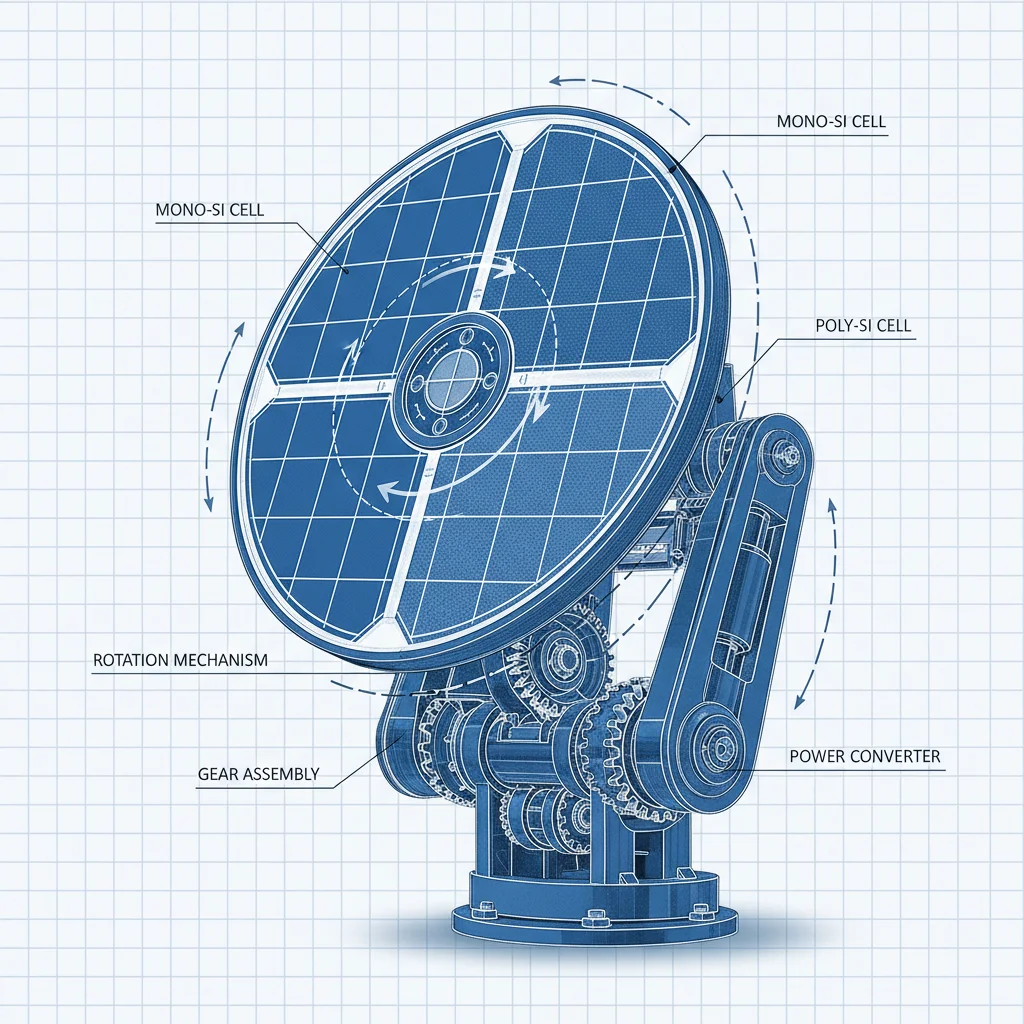
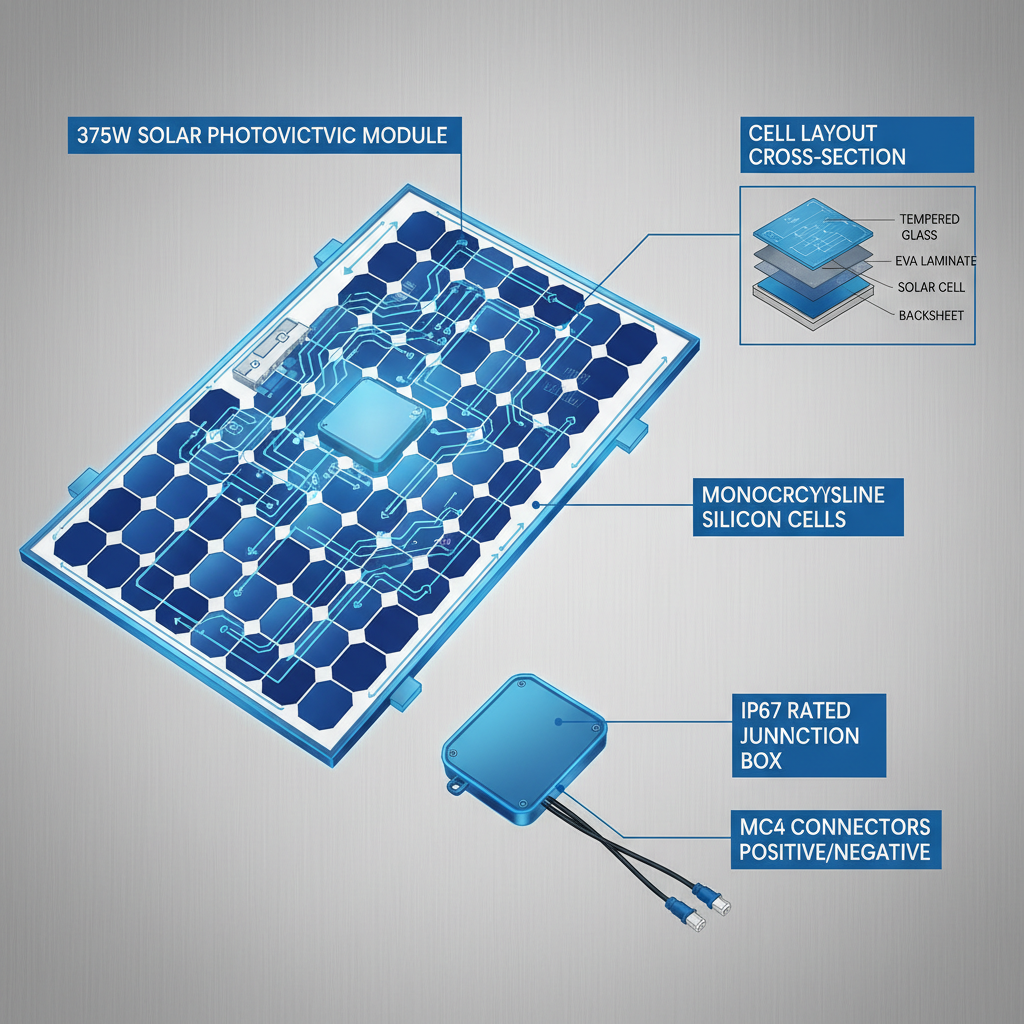
In the context of modern industry, the 375w solar panel is often integrated into larger Solar Systems, combining Monocrystalline or Polycrystalline cells with tempered glass and anodized aluminum frames. This construction ensures that the module can withstand environmental stressors like hail, wind loads, and salt mist, making it a reliable asset for long-term energy production.
Core Technical Factors for Performance
Durability is a paramount factor for any 375w solar panel. The use of high-transmittance glass and ethylene-vinyl acetate (EVA) encapsulants ensures that the solar cells are protected from moisture and oxygen, which would otherwise cause premature degradation. A high-quality frame prevents micro-cracks in the silicon wafers, maintaining the panel's structural integrity over its 25-year lifespan.
Efficiency and Scalability are where the 375w solar panel truly shines. By utilizing half-cut cell technology, these panels reduce internal resistance and improve performance in shaded conditions. This scalability allows a user to start with a small array and expand their system as their energy needs grow, without needing to replace the existing hardware.
Cost efficiency is the final piece of the puzzle. The mass production of the 375w solar panel has driven down the cost per watt, making solar energy accessible to a wider demographic. When calculating the Levelized Cost of Energy (LCOE), these panels offer a competitive edge by providing a high energy yield relative to their initial procurement and installation costs.
Practical Applications and Global Use Cases
The versatility of the 375w solar panel allows it to be deployed in a variety of challenging environments. In remote industrial zones, such as mining sites or agricultural pump stations, these panels provide a steady power source for sensors and automated machinery, eliminating the need for expensive diesel fuel transport and reducing the risk of spills.
In post-disaster relief operations, rapid-deployment solar kits featuring the 375w module are used to power emergency communication hubs and medical refrigeration. Because they are standardized, they can be easily paired with portable battery banks, ensuring that life-saving equipment remains operational even when the local power grid has completely collapsed.
Efficiency Comparison of 375w Solar Panel Variants
Long-Term Value and Sustainability Benefits
Investing in a 375w solar panel is as much a financial decision as it is an environmental one. Over a 20-year period, the reduction in monthly utility bills often exceeds the initial installation cost by several multiples. This financial liberation provides homeowners with a sense of security and dignity, knowing that their basic energy needs are decoupled from the volatility of global fossil fuel markets.
From a sustainability standpoint, the carbon offset provided by a standard 375w array is substantial. By replacing coal-fired electricity, these panels actively combat the greenhouse effect and contribute to cleaner local air quality. Furthermore, the industry is moving toward circular economy principles, where the aluminum and silicon in old 375w modules can be reclaimed and recycled into new panels, ensuring a closed-loop lifecycle.
Future Trends in Photovoltaic Innovation
The evolution of the 375w solar panel is currently being driven by the integration of Perovskite materials. This "tandem cell" approach involves layering Perovskite over traditional silicon to capture a broader spectrum of sunlight, potentially pushing the efficiency of 375w-class modules far beyond current theoretical limits.
Digital transformation is also playing a key role. Modern 375w systems are increasingly paired with AI-driven smart inverters and IoT monitoring tools. These systems can predict maintenance needs by analyzing voltage drops in real-time, ensuring that the panels operate at peak efficiency without requiring constant manual inspection.
Additionally, we are seeing a rise in "Bifacial" 375w panels, which can absorb light from both the front and the back. By utilizing reflected light from the ground (albedo), these panels can increase their total energy yield by up to 30%, making them ideal for installations on white rooftops or in snowy regions.
Challenges and Professional Solutions
Despite their advantages, the deployment of the 375w solar panel is not without challenges. One of the most common issues is "LID" (Light Induced Degradation), where cells lose a small percentage of efficiency immediately after first exposure to sunlight. Professional installers combat this by selecting N-type silicon cells, which are naturally more resistant to LID than standard P-type cells.
Another limitation is the impact of extreme heat; as temperature rises, the efficiency of a solar panel typically drops. To solve this, engineers implement advanced thermal management strategies, such as increasing the air gap between the panel and the roof or using specialized cooling frames that facilitate natural convection.
Finally, the intermittency of solar power remains a hurdle. The professional solution is the integration of high-capacity Lithium-Iron Phosphate (LiFePO4) batteries. By pairing a 375w solar panel array with a smart storage system, users can store excess energy generated during the day for use at night, achieving true energy autonomy.
Comparative Analysis of 375w Solar Panel Specifications
| Panel Technology |
Efficiency Rate |
Temp. Coefficient |
Durability Score (1-10) |
| Mono PERC 375w |
20.5% |
-0.34%/°C |
9 |
| Poly-Si 375w |
17.2% |
-0.39%/°C |
8 |
| Bifacial Mono 375w |
21.8% |
-0.32%/°C |
10 |
| Half-Cut Mono 375w |
20.1% |
-0.35%/°C |
9 |
| Thin-Film 375w |
14.5% |
-0.21%/°C |
7 |
| Custom Hybrid 375w |
19.0% |
-0.30%/°C |
8 |
FAQS
The number depends on your monthly electricity usage. For a home consuming 900kWh per month in a sunny region, you would likely need around 20 to 25 of the 375w solar panel modules to cover your load. It is always recommended to calculate your specific peak sun hours and include a 20% buffer for cloudy days.
Yes, the 375w module is highly effective for off-grid setups. Its power-to-weight ratio makes it easier to install on cabins or RVs while providing sufficient wattage to charge a 24V or 48V battery bank. When paired with a high-quality MPPT charge controller, it ensures maximum energy harvest even in suboptimal lighting.
Monocrystalline panels are made from a single silicon crystal, offering higher efficiency and a sleek black look, performing better in low light. Polycrystalline panels are made from multiple crystals, typically appearing blue and being slightly less efficient but often more affordable. For most modern installations, the Mono 375w solar panel is preferred for its space-saving capabilities.
Most reputable manufacturers provide a linear power warranty of 25 years. This means that while the panel won't stop working, its output will slowly decrease. A high-quality 375w panel is usually guaranteed to maintain at least 80-85% of its original power output after two and a half decades of use.
Yes, but you must be careful with your string configuration. If connected in series, the current will be limited by the lowest-rated panel in the string. To avoid "mismatch loss," it is better to put panels of the same wattage in the same string or use power optimizers/micro-inverters to manage each 375w solar panel independently.
Absolutely. These panels are designed for outdoor exposure. They feature IP65 or IP67 rated junction boxes and tempered glass that can withstand heavy snow loads and high-velocity winds. The anodized aluminum frame also protects against corrosion in salty coastal environments.
Conclusion
The 375w solar panel stands as a cornerstone of the modern energy transition, offering an ideal balance of efficiency, cost-effectiveness, and physical scalability. From powering remote humanitarian hubs to reducing the carbon footprint of suburban households, these modules provide a reliable path toward energy independence. By focusing on core technical factors like cell quality and thermal management, users can ensure that their investment delivers maximum value over several decades.
As we look toward the future, the integration of Perovskite materials and AI-driven monitoring will only enhance the capabilities of the 375w standard. For those seeking to transition to green energy, the current market offers a mature, stable, and high-performing solution that mitigates environmental impact while securing long-term financial savings. We invite you to take the first step toward a sustainable future by exploring our full range of solar solutions. Visit our website: www.shaobosolar.com