The global transition toward renewable energy has placed a significant spotlight on the efficiency and reliability of photovoltaic modules. Among the various options available, the 375 watt solar panel has emerged as a versatile benchmark, balancing power output with physical dimensions to suit both residential and small-scale commercial installations. Understanding the nuances of this specific wattage helps homeowners and engineers optimize energy harvesting in diverse climatic conditions.
As the world strives to meet the ambitious climate goals set by the Paris Agreement and monitored by international bodies, the demand for standardized, high-efficiency energy solutions is skyrocketing. The 375 watt solar panel addresses the critical challenge of maximizing energy density per square meter, ensuring that limited roof space is utilized to its fullest potential without requiring excessively heavy mounting hardware.
Investing in the right solar capacity is not merely a technical decision but a strategic financial move toward energy independence. By analyzing the technical specifications and practical deployment of a 375 watt solar panel, users can better estimate their Return on Investment (ROI) and reduce their carbon footprint, contributing to a sustainable global power grid that relies less on fossil fuels and more on clean, abundant sunlight.
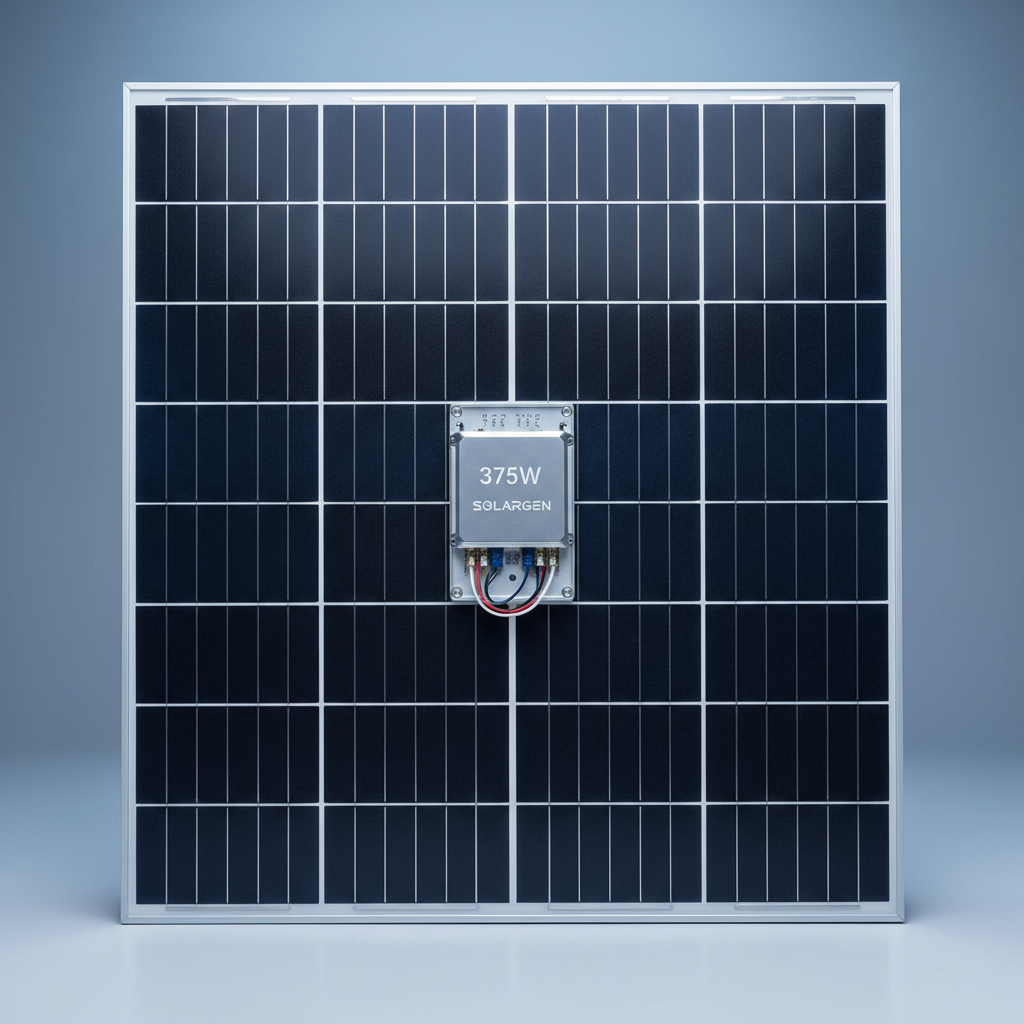
Understanding the 375 Watt Solar Panel Definition
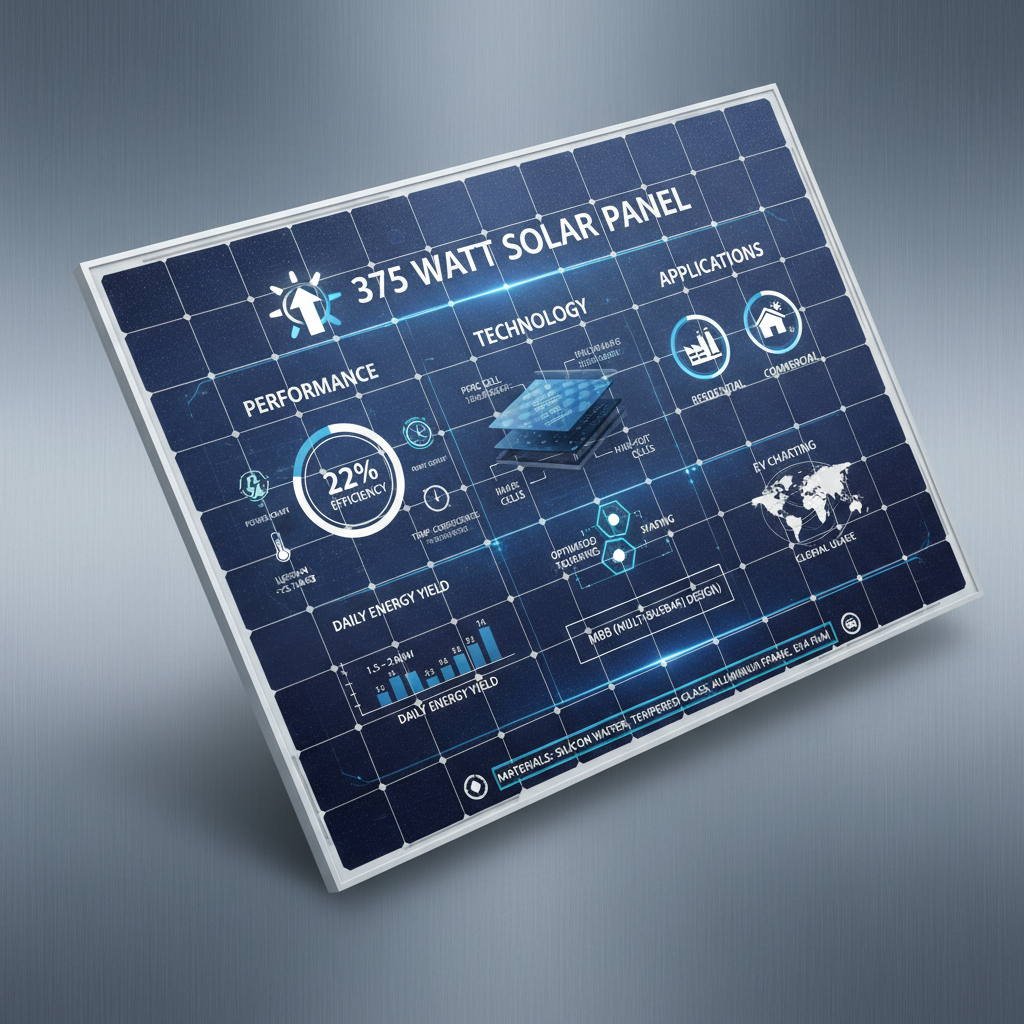
In simple terms, a 375 watt solar panel is a photovoltaic module capable of producing 375 watts of direct current (DC) electricity under Standard Test Conditions (STC). These conditions typically involve a solar irradiance of 1,000 W/m² and a cell temperature of 25°C. It represents a "sweet spot" in the market, offering higher efficiency than older 250W panels while remaining more manageable in weight and size than massive utility-scale 500W+ modules.
Modern industry utilizes these panels to bridge the gap between portable solar kits and industrial power plants. Whether it is integrated into a Monocrystalline Solar Panel array for a luxury home or used in a Polycrystalline Solar Panel setup for a rural farm, the 375W capacity provides a reliable baseline for calculating system sizing, inverter requirements, and battery storage needs for off-grid living.
Global Relevance and Industry Context
The global adoption of the 375 watt solar panel is closely tied to the plummeting cost of silicon wafers and the scaling of manufacturing processes. According to data trends seen in the International Energy Agency (IEA) reports, the shift toward higher-wattage residential panels has accelerated as homeowners seek to maximize the energy yield of limited rooftop areas. This transition is critical for urban environments where space is at a premium, but energy demands are rising due to the proliferation of electric vehicles and smart home appliances.
From a humanitarian perspective, the deployment of these panels in developing regions has transformed healthcare and education. In many sub-Saharan African communities, a small array of 375W panels can power a clinic's refrigeration for vaccines or provide lighting for schools. This scalability makes the technology a cornerstone of "energy democracy," allowing remote populations to leapfrog traditional grid infrastructure entirely in favor of decentralized, clean energy.
However, the industry faces the challenge of "efficiency ceilings." As we push the limits of standard silicon, the 375 watt solar panel serves as a reliable, cost-effective standard while the industry experiments with perovskite tandem cells. The current global market relies on these panels because they offer a proven track record of durability and a predictable degradation rate, ensuring that investors get the 20 to 25 years of service promised by manufacturers.
Core Components and Technical Factors
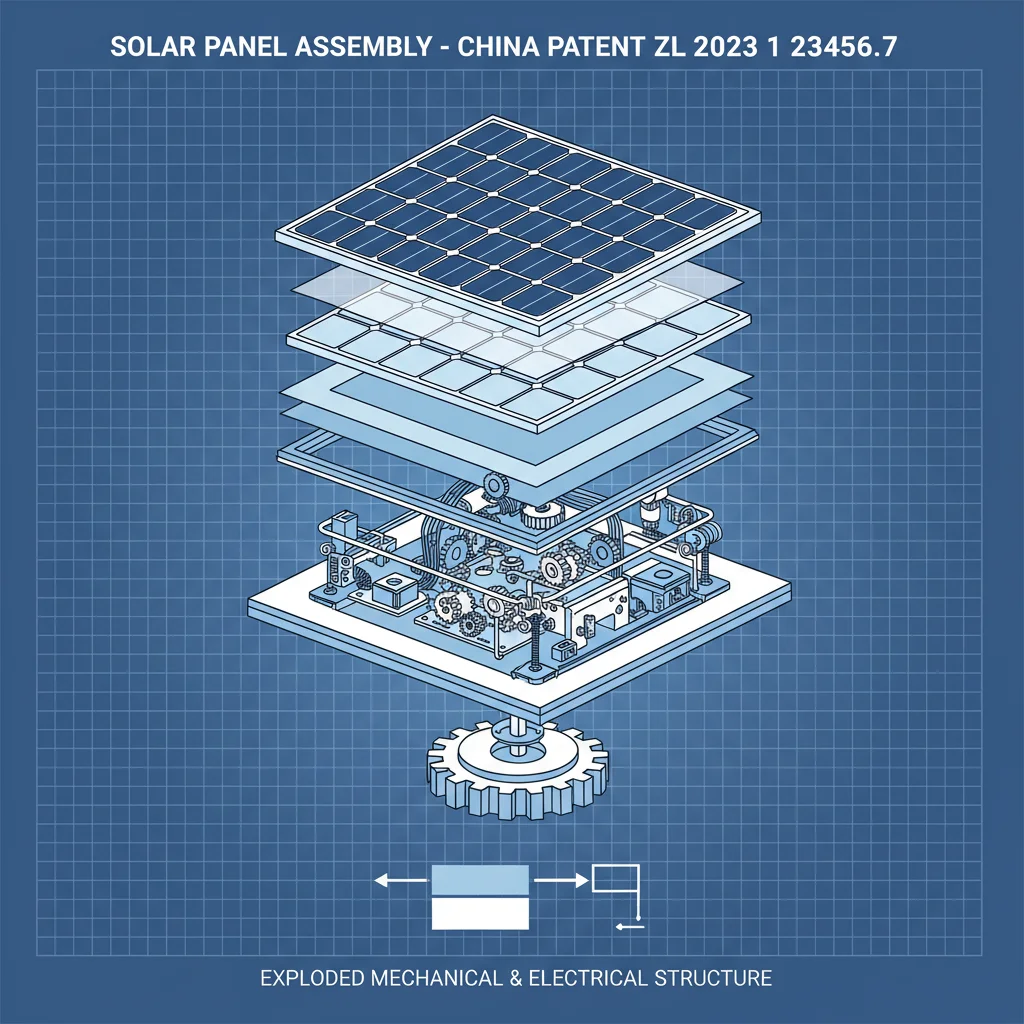
The efficiency of a 375 watt solar panel is primarily driven by its cell architecture. Most high-performing 375W models utilize half-cut cell technology, which splits each solar cell in half to reduce internal resistive losses. This not only increases the total power output but also significantly improves the panel's performance under partial shade, as only half the module is affected when a shadow falls across a portion of the surface.
Durability is another core factor, with the 375 watt solar panel typically featuring tempered glass and an anodized aluminum frame. These materials are engineered to withstand extreme weather, including heavy snow loads and high-velocity winds. The inclusion of an EVA (Ethylene Vinyl Acetate) encapsulant protects the delicate silicon wafers from moisture and oxidation, ensuring the panel maintains its rated wattage over decades of outdoor exposure.
Cost efficiency is achieved through the optimization of the "Price-per-Watt" ratio. By standardizing the 375 watt solar panel, manufacturers have optimized the supply chain for glass, frames, and junction boxes. This scalability allows installers to design systems that are modular; adding or removing a few 375W panels can precisely tune a system to a building's specific energy load, reducing waste and lowering the initial capital expenditure for the consumer.
Practical Applications and Use Cases
The versatility of the 375 watt solar panel makes it ideal for a wide range of real-world scenarios. In residential sectors, these panels are frequently bundled into 10kW to 20kW systems, providing enough power to run air conditioning and water heaters. In the commercial sector, warehouses with large flat roofs often employ thousands of these modules to offset operational costs and achieve LEED certification for green building standards.
Beyond traditional buildings, the 375 watt solar panel is a lifeline in remote industrial zones. Mining operations or telecommunications towers in the desert utilize these panels to power signal boosters and monitoring equipment without the need for expensive diesel fuel transport. Similarly, in post-disaster relief operations, rapidly deployable arrays of 375W panels are used to establish emergency communication hubs and clean water filtration systems for displaced populations.
Performance Metrics of 375 Watt Solar Panel Variants
Long-Term Advantages and Value
The primary advantage of opting for a 375 watt solar panel is the intersection of reliability and sustainability. Logically, the high energy density reduces the amount of racking and cabling required, which lowers installation labor costs and minimizes the physical impact on the roof structure. From an environmental standpoint, the carbon payback period—the time it takes for the panel to generate the energy used in its own production—is remarkably short, typically under two years.
Beyond the numbers, there is an emotional value associated with energy independence. The trust that a homeowner feels knowing their power supply is secure during grid outages, or the dignity provided to a rural village through electrification, cannot be quantified. By choosing a standardized 375W output, users ensure that they are using a technology that is widely supported by technicians globally, ensuring long-term maintenance and peace of mind.
Future Trends in Photovoltaic Innovation
As we look toward the next decade, the 375 watt solar panel is evolving through the integration of smart technology. We are seeing the rise of "Smart Panels" equipped with built-in micro-inverters and IoT monitoring sensors. These allow users to track the performance of every single 375W module in real-time via a smartphone app, identifying a failing cell or a dirty panel instantly, which maximizes the overall system uptime.
Material science is also pushing boundaries with the introduction of N-type TOPCon and HJT (Heterojunction) technologies. While the wattage may remain around the 375W mark for specific form factors, the efficiency of converting sunlight to electricity is increasing. This means future versions of these panels will perform better in low-light conditions and experience even lower degradation over time, extending the lifespan from 25 to 30 or even 40 years.
Furthermore, the integration of bifacial technology—where the 375 watt solar panel can absorb light from both the front and the back—is becoming a standard for ground-mounted systems. By capturing reflected light from the ground (albedo), these panels can exceed their nominal 375W rating, providing an unexpected bonus in energy production without increasing the physical size of the installation.
Overcoming Common Implementation Challenges
Despite its benefits, deploying a 375 watt solar panel is not without hurdles. One common limitation is the "voltage mismatch" that occurs when mixing different brands or wattage panels in a single string. To solve this, experts recommend the use of DC optimizers or micro-inverters, which allow each panel to operate at its Maximum Power Point (MPP) independently, preventing one underperforming panel from dragging down the entire array.
Another challenge is the accumulation of dust and debris, known as "soiling," which can reduce the output of a 375W panel by as much as 20% in arid regions. Innovative solutions now include hydrophobic nano-coatings that repel water and dust, as well as automated robotic cleaning systems for larger installations. These ensure that the panel consistently hits its 375W target regardless of the environmental pollution levels.
Lastly, the logistics of transporting and installing these glass-heavy modules can be risky. The industry has responded by improving packaging standards and developing lighter-weight composite frames. By focusing on "design for installation," manufacturers have made the 375 watt solar panel easier to handle for small crews, reducing the risk of micro-cracks during the mounting process and ensuring the structural integrity of the silicon cells.
Technical Analysis and Comparison of 375W Solar Panel Configurations
|
Panel Technology
|
Efficiency Score (1-10)
|
Low-Light Performance
|
Cost-to-Benefit Ratio
|
| Mono-PERC 375W |
9 |
High |
Excellent |
| Poly-Silicon 375W |
6 |
Moderate |
Very Good |
| Bifacial 375W |
8 |
Very High |
Good |
| HJT Cell 375W |
10 |
Extreme |
Moderate |
| Thin-Film 375W |
5 |
High |
Fair |
| Half-Cut Mono 375W |
9 |
High |
Excellent |
FAQS
The number of panels depends on your monthly electricity consumption. For a home using 900 kWh per month in a sunny region, you might need roughly 20 to 25 375 watt solar panels to cover 100% of your energy needs. This assumes an average of 4.5 peak sun hours per day. It is always recommended to perform a professional energy audit to determine the exact count based on your roof's orientation and local weather patterns.
While technically possible, it is generally discouraged in a simple string inverter setup because the entire string will be limited by the lowest-performing panel. However, if you use micro-inverters or DC power optimizers, each panel operates independently. In this case, mixing a 375W panel with others will not bottleneck the system, as each module will maximize its own output regardless of the others.
Yes, but the output will be significantly lower than the rated 375W. Monocrystalline versions of the 375 watt solar panel generally perform better in low-light or overcast conditions than polycrystalline ones. To maximize winter or cloudy-day yields, ensure the panels are tilted at an optimal angle for your latitude and kept clean of debris.
Most high-quality 375 watt solar panels come with a linear power warranty of 25 years. This doesn't mean the panel stops working after 25 years, but rather that it is guaranteed to produce a certain percentage (usually 80-85%) of its original 375W capacity. With proper maintenance, many panels can continue generating power for 30 to 40 years.
The safest way to clean a 375 watt solar panel is using distilled water and a soft microfiber cloth or a soft-bristle brush. Avoid using abrasive chemicals or high-pressure power washers, as these can scratch the tempered glass or damage the frame seals. Cleaning them early in the morning or late in the evening prevents thermal shock to the glass.
Yes, but you must check the physical dimensions. A 375 watt solar panel is typically larger than the small 100W panels often seen on RVs. If you have the roof space, a 375W panel is highly efficient for charging large house battery banks quickly. Ensure you use a compatible MPPT charge controller to handle the higher voltage and current produced by a 375W module.
Conclusion
In summary, the 375 watt solar panel represents a sophisticated balance of power, efficiency, and affordability. By integrating advanced cell technologies like half-cut silicon and PERC, these modules provide a reliable energy solution for everything from remote humanitarian outposts to modern urban homes. The long-term value lies not just in the immediate reduction of electricity bills, but in the contribution to a global shift toward a carbon-neutral future.
As photovoltaic technology continues to evolve, the 375W standard serves as a foundation for further innovations in bifacial and smart-monitoring systems. For those looking to transition to clean energy, prioritizing quality components and professional installation will ensure that your investment pays off for decades. To explore the best options for your specific energy needs, visit our website: www.shaobosolar.com