The global transition toward sustainable energy has placed an unprecedented spotlight on the technical capabilities of solar panel system manufacturers. As nations strive to meet ambitious net-zero targets, the demand for high-efficiency photovoltaic modules has shifted from a niche requirement to a global industrial imperative. Understanding the nuances of module design and manufacturing is essential for ensuring long-term energy security and reducing reliance on volatile fossil fuel markets.
Modern infrastructure projects now rely heavily on the precision of solar panel system manufacturers to deliver modules that can withstand extreme environmental stressors while maintaining high energy conversion rates. From the integration of advanced cell interconnects to the implementation of anti-soiling coatings, the engineering behind these systems determines the actual return on investment for commercial and industrial power plants.
Selecting the right partner among various solar panel system manufacturers ensures that the deployed technology meets rigorous international standards like TUV Rheinland certification. By focusing on a balance of power output, mechanical durability, and low-light performance, users can maximize the energy yield per square meter of installation.

Engineering Excellence in Solar Module Design
The sophistication of modern solar modules is rooted in the pursuit of minimal energy loss. Advanced SB 5BB design modules are engineered specifically to reduce cell series resistance and lower the stress between cell interconnectors, which directly improves the overall conversion efficiency of the module. This meticulous approach to internal architecture allows for a more seamless flow of electrons, ensuring that the maximum amount of sunlight is converted into usable electricity.
To guarantee these theoretical gains in real-world conditions, leading solar panel system manufacturers employ a 100% EL (Electroluminescence) double-inspection process. This rigorous quality control ensures that modules are entirely free of micro-cracks or defects that could compromise long-term performance. When combined with a positive power tolerance of 0+3%, these modules provide a reliable power floor for large-scale energy arrays.
Defining the Role of Solar Panel System Manufacturers
Solar panel system manufacturers are the industrial entities responsible for the end-to-end creation of photovoltaic modules, transforming raw silicon and tempered glass into high-precision energy generators. Their role extends beyond simple assembly; they are innovators who integrate chemical engineering, material science, and electrical physics to push the boundaries of cell efficiency.
In the context of modern industry, these manufacturers act as the backbone of the green energy transition. By optimizing the production of Poly-crystalline and Mono-crystalline cells, they enable a variety of applications—from residential rooftops to massive utility-scale solar farms. Their ability to scale production while maintaining tight tolerances is what makes solar energy cost-competitive with traditional power sources.
Furthermore, the humanitarian impact of these manufacturers is significant. By producing durable, high-efficiency panels, they facilitate the deployment of power to remote areas and disaster-stricken zones where traditional grid infrastructure is non-existent. This democratization of energy is a direct result of the industrial scaling achieved by global solar panel system manufacturers.
Key Technical Components for High Efficiency
One of the primary focuses for solar panel system manufacturers is the implementation of anti-reflective and anti-soiling surfaces. These advanced coatings reduce power loss caused by the accumulation of dirt and dust, which is a common challenge in arid or industrial environments. By ensuring that more photons reach the silicon cells, the module maintains a higher output over time.
Durability is equally critical, which is why professional solar panel system manufacturers utilize low-iron tempered glass with high transmission rates. This glass, typically 3.2mm or 4.0mm thick, protects the internal cells from impact while maximizing light penetration. Coupled with an anodized aluminum alloy frame, the modules are certified to withstand high wind loads of 2400Pa and snow loads of 5400Pa.
The internal electrical safety is managed through the integration of bypass diodes, which provide array shading protection. This ensures that if one part of the module is obscured, the entire system does not suffer a catastrophic drop in voltage. This level of detail is what separates premium solar panel system manufacturers from entry-level producers.
Performance Benchmarks and Power Metrics
Evaluating the quality of a module requires a deep dive into its electrical characteristics under Standard Test Conditions (STC). For a high-performance Poly-crystalline module, a maximum power (Pmax) of 330W and a module efficiency of 17.5% represent a strong benchmark for reliability and output. These figures, verified by TUV Rheinland, provide the factual basis for calculating the energy yield of a full-scale installation.
Furthermore, the ability of a module to perform in low-light irradiance environments is a key differentiator. While many panels struggle during overcast days, modules from top solar panel system manufacturers are optimized for low-light response, ensuring a consistent power curve throughout the day and across different seasonal changes.
Comparative Efficiency Ratings by Manufacturer Standard
Global Applications of High-Output PV Systems
High-output modules are deployed across diverse global landscapes, from the scorching deserts of the Middle East to the industrial hubs of Southeast Asia. In these regions, the resistance to Potential Induced Degradation (PID) is paramount. Professional solar panel system manufacturers ensure their modules are PID-resistant, preventing the gradual loss of power that often plagues lower-quality installations in high-humidity or high-temperature zones.
Beyond utility farms, these systems are critical for remote industrial zones and off-grid communication towers. By using modules binned by current to improve system performance, engineers can create highly stable micro-grids that power essential services without the need for expensive and polluting diesel generators.
Long-Term Value and Sustainability Gains
The long-term value of investing in premium solar panel system manufacturers lies in the reduction of the Levelized Cost of Energy (LCOE). When a module boasts a high cell efficiency of 19% and a robust mechanical build, the frequency of replacements and maintenance visits drops significantly. This ensures that the financial projections for a solar project remain accurate over a 25-year lifespan.
From a sustainability perspective, the use of anodized aluminum and high-transmission tempered glass reduces the material footprint while extending the product life. The ability to generate 330W+ per module means fewer panels are required to meet the same energy target, reducing the total land use and the environmental impact of the installation process.
Moreover, the trust established through TUV Rheinland certification provides investors and government bodies with the confidence to fund larger green energy initiatives. This synergy between industrial reliability and environmental stewardship is what drives the global adoption of solar technology.
Future Innovations in Photovoltaic Manufacturing
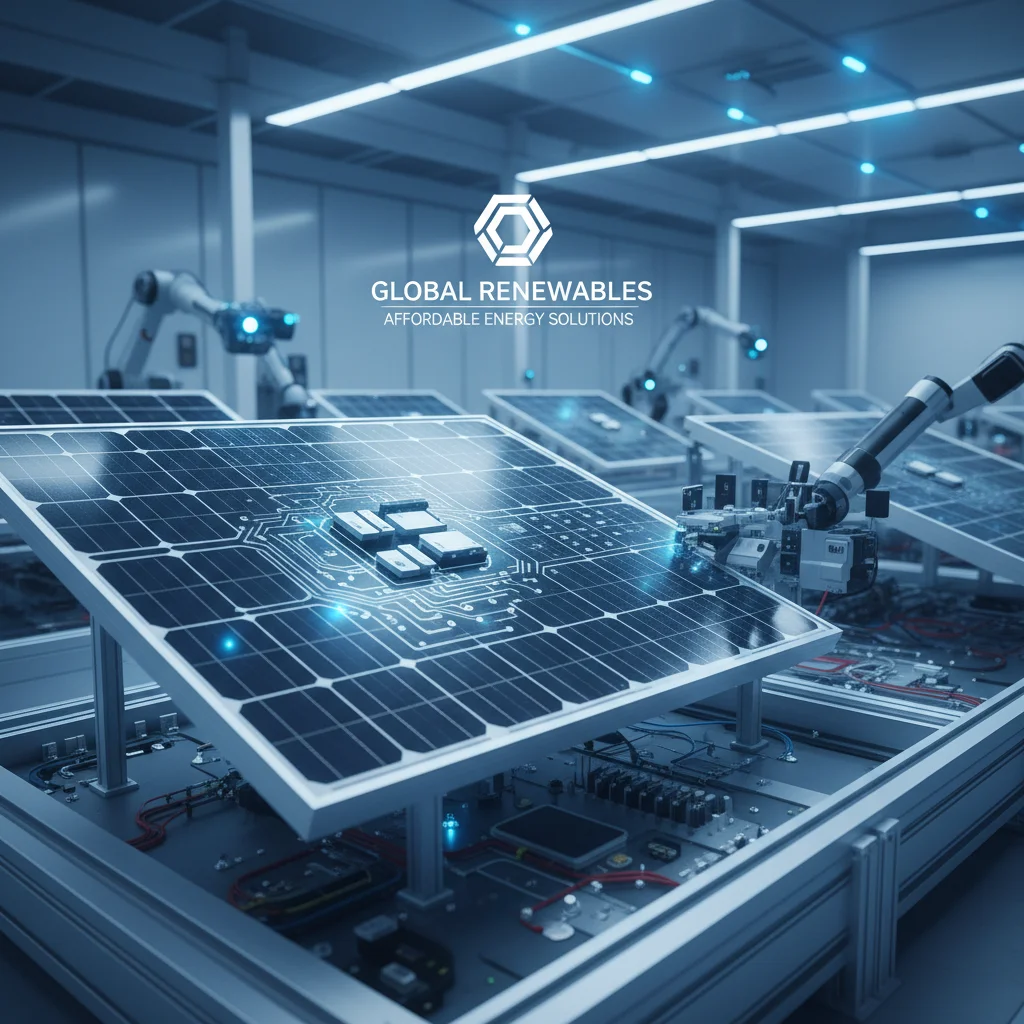
The future of solar panel system manufacturers is leaning toward the integration of digital transformation and automation in the assembly line. We are seeing a shift toward AI-driven quality control where EL inspection is performed in real-time, allowing for the immediate correction of cell alignment and soldering issues, further pushing module efficiency toward the theoretical limits of silicon.
Material science is also evolving, with a focus on reducing the temperature coefficient of Pmax. Currently, a coefficient of -0.40%/°C is standard for many high-end Poly-crystalline modules, but the next generation of manufacturing aims to minimize this further, allowing panels to maintain higher efficiency even as they heat up under the summer sun.
As the industry moves toward more integrated "solar systems," manufacturers are focusing on the synergy between the module and the junction box (IP65 rated) and MC4 compatible connectors to ensure zero-loss transmission. This holistic approach ensures that the energy generated at the cell level is delivered to the load with maximum efficiency.
Technical Analysis of Solar Module Manufacturing Standards
| Performance Metric |
Standard Poly-Si |
SB 5BB Design |
Efficiency Score (1-10) |
| Max Power (Pmax) |
280W - 300W |
330W+ |
9 |
| Module Efficiency |
15% - 16% |
17.5% |
8 |
| Wind Load Resistance |
2000Pa |
2400Pa |
9 |
| Snow Load Resistance |
4000Pa |
5400Pa |
10 |
| Inspection Method |
Visual/Single EL |
100% Double EL |
10 |
| PID Resistance |
Standard |
Enhanced PID-R |
8 |
FAQS
The SB 5BB design specifically targets the reduction of cell series resistance and stress between cell interconnectors. By optimizing the busbar configuration, it improves the flow of electricity and reduces internal energy loss, which directly increases the module's conversion efficiency and overall power output compared to older designs.
Premium manufacturers utilize a 100% EL (Electroluminescence) double-inspection process. This technique acts like an X-ray for the solar cell, revealing micro-cracks, inactive areas, or soldering defects that are invisible to the human eye, ensuring that only flawless modules reach the customer.
Yes, the modules are engineered for extreme durability. They are certified to withstand wind loads up to 2400Pa and snow loads up to 5400Pa. The use of an anodized aluminum alloy frame and tempered glass ensures the structural integrity of the module in harsh environments.
The anti-reflective and anti-soiling surface is designed to prevent dust, dirt, and grime from adhering to the glass. This reduces the amount of light blocked by environmental debris, maintaining a high power output and reducing the frequency and cost of manual cleaning for the system owner.
Positive power tolerance ensures that the actual power output of the module will never be lower than the rated power (e.g., 330W). Instead, it may be up to 3% higher, providing a guarantee that the customer receives at least the advertised wattage, or slightly more.
Potential Induced Degradation (PID) is a phenomenon where voltage leaks occur, causing a significant drop in power output over time. PID-resistant modules prevent this degradation, which is especially critical in large-scale arrays where high system voltages and environmental humidity could otherwise lead to premature efficiency loss.
Conclusion
The synergy of high-efficiency cell design, rigorous EL inspection, and extreme mechanical durability defines the current gold standard for solar panel system manufacturers. By integrating SB 5BB architecture and anti-soiling technology, the industry has moved toward modules that not only produce more power (330W+) but do so with unmatched reliability across diverse global climates.
As we look toward the future, the continued optimization of temperature coefficients and the adoption of AI-driven manufacturing will further drive down the LCOE, making solar energy the most viable option for global power. For those seeking to maximize their energy independence, partnering with a manufacturer committed to TUV Rheinland standards and high-transmission materials is the most strategic path forward. Visit our website: www.shaobosolar.com