You know, after running around construction sites all year, dealing with dust and the smell of concrete, you start to see what *really* matters. Industrial solar panel manufacturers… it's a hot topic right now, everyone's talking about it. Not just because of the green push, though that's huge, but because folks are realizing they need reliable power, and fast, especially in remote areas.
To be honest, it's not all sunshine and roses, though. I've seen a lot of designs that *look* good on paper, but fall apart when you try to actually install them. Too much reliance on fancy software simulations, not enough real-world testing. It's easy to get caught up in efficiency numbers, but forget about things like wind load, hail resistance, or even just getting a wrench onto the mounting hardware.
And let's not forget the material side of things. You’ve got your standard silicon panels, of course. Feels…cold, almost glassy. Then you’ve got the newer thin-film options. They’re lighter, more flexible, but handling them is a whole different story. They can crease so easily, and the smell when you cut them… well, let's just say it's not pleasant. I encountered this at a factory in Jiangsu province last time, the odor was so strong they had to ventilate the entire workshop.
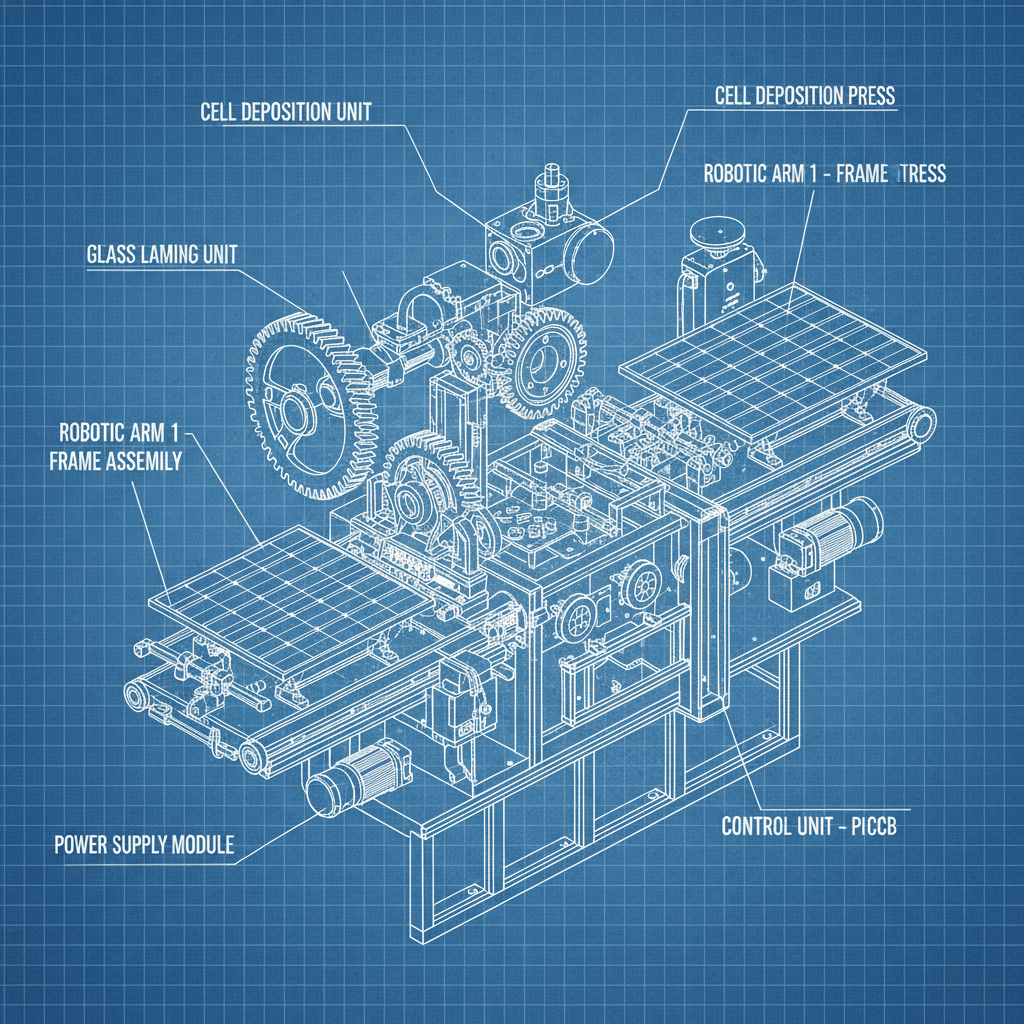
Industry Trends and Design Pitfalls
Have you noticed how everyone is leaning towards bifacial panels these days? It makes sense, more power output. But the mounting systems… that's where things get tricky. You need enough clearance underneath for the reflected light to actually be useful, and that adds to the cost and complexity. Strangely, a lot of manufacturers underestimate the amount of maintenance these systems require. Dust, snow, bird droppings... it all adds up.
And the whole 'plug and play' marketing thing? Don't believe the hype. These aren't like LEGOs. There’s always some on-site adjustment, some wiring issue, some unexpected obstruction. It's always *something*. Anyway, I think the biggest trend is moving towards integrated solutions – panels combined with energy storage, microgrids, and smart monitoring systems. Makes life easier, at least in theory.
Materials: The Feel, Smell, and Handling
Let’s talk about the guts of these things. Silicon is the workhorse, obviously. It’s tough, relatively inexpensive, and has a decent lifespan. But it's also brittle. Drop one, and you're buying a new one. The aluminum frames are pretty standard, but the quality varies *wildly*. Some are flimsy, others are over-engineered and heavy as sin. And the connectors… oh, the connectors. Cheap ones corrode in a heartbeat, causing all sorts of headaches.
Then you get into the encapsulants – the stuff that protects the cells from the elements. EVA is common, but it degrades over time, causing yellowing and reduced performance. TPT is more durable, but more expensive. It’s always a trade-off. The backsheets too, PET, TPT, or even glass. Glass is good, but adds weight, PET is cheaper, but less resilient. It’s a puzzle.
And don't even get me started on the adhesives. Some of those things are incredibly difficult to work with, especially in cold weather. They get sticky, they clump, they just generally make your life miserable. You'll end up with adhesive all over your gloves and tools.
Real-World Testing Beyond the Lab
Look, I respect the lab tests, the IEC certifications, all that. But they don't tell the whole story. You need to see how these panels hold up in the real world, under *actual* conditions. I mean, how do they perform after a hailstorm? How do they handle extreme temperature swings? How easily do they get covered in dust and dirt?
We've started doing our own on-site testing. We set up test arrays in different climates, monitor their performance, and subject them to simulated stress tests. We've even buried panels in sand to see how they hold up to abrasion. It’s messy, it’s time-consuming, but it’s worth it. It reveals problems the lab never could.
The other thing is, you have to test the *entire system*, not just the panels. The inverters, the mounting hardware, the wiring… it all has to work together seamlessly. I saw a project last year where they used cheap inverters, and the whole system failed within six months. The panels were fine, but the inverters couldn't handle the load.
How Users Actually Use Them
This is where things get interesting. You’d think people would use these panels for what they’re designed for – generating electricity. But you'd be surprised. I’ve seen folks using them as makeshift roofs, as shading devices, even as decorative elements. It’s…creative, to say the least.
A lot of farmers are using them to power irrigation pumps, which is a smart move. Reduces their reliance on diesel generators and lowers their operating costs. But they often don’t realize the importance of regular cleaning. Dust and dirt can significantly reduce the panel’s output. They just assume the sun will take care of it, which, you know…it doesn’t.
industrial solar panel manufacturers Performance Metrics
Advantages and Disadvantages – A Balanced View
Look, the advantages are pretty clear. Reduced energy costs, lower carbon footprint, increased energy independence. But there are downsides, too. The initial investment can be significant, and the payback period can be long. And you're relying on the sun, which, as we all know, isn’t always shining.
Another issue is disposal. What do you do with these panels when they reach the end of their lifespan? There's a lot of valuable material in there, but recycling them is still a challenge. And frankly, a lot of companies aren’t taking it seriously enough. It's a problem for future generations, and we need to start addressing it now.
Customization and Specific Applications
We’ve done some pretty wild customization jobs over the years. Last month, a guy building a mobile command center wanted panels that could conform to the curved roof of his vehicle. That was a headache, let me tell you. Required a lot of cutting, bending, and custom mounting brackets.
But it's doable. The flexible panels are key for that kind of application. We’ve also done projects where customers needed panels with specific voltage and current ratings to match their existing equipment. It's not always easy, but we can usually make it happen. It depends on the volume, of course. Small orders are always more expensive.
A Customer Story and Practical Considerations
Last month, that small boss in Shenzhen who makes smart home devices insisted on changing the interface to . Said it was more "future-proof." I tried to tell him it was a bad idea - the connectors aren't designed for outdoor use, they're prone to corrosion. He wouldn’t listen. Six weeks later, half his installation was dead. Cost him a fortune to fix.
That’s a perfect example of why you need to listen to the people who actually *install* these things. We've seen it all – wrong wire gauges, improper grounding, inadequate ventilation. These mistakes can lead to fires, equipment failures, and a lot of wasted money.
It all boils down to this: good design, quality materials, proper installation, and regular maintenance.
Summary of Key Considerations for Industrial Solar Panel Manufacturers
| Component Quality |
Installation Complexity |
Environmental Resistance |
Long-Term Maintenance |
| High-grade silicon cells (9/10) |
Moderate (6/10) - requires skilled technicians |
Excellent (8/10) - corrosion-resistant materials |
Low (4/10) - minimal cleaning required |
| Durable aluminum frames (8/10) |
High (7/10) - complex mounting systems |
Good (7/10) - withstands moderate weather conditions |
Moderate (6/10) - periodic inspections needed |
| Reliable connectors (7/10) |
Low (5/10) - straightforward wiring |
Average (5/10) - susceptible to extreme temperatures |
High (8/10) - regular cleaning and inspections critical |
| High-efficiency inverters (8/10) |
Moderate (6/10) - requires electrical expertise |
Good (7/10) - sealed enclosures for weather protection |
Moderate (6/10) - inverter maintenance required |
| Robust mounting hardware (7/10) |
High (8/10) - secure installation crucial |
Excellent (9/10) - designed for high wind loads |
Low (3/10) - minimal maintenance after installation |
| Weather-resistant encapsulants (6/10) |
Low (4/10) - minimal assembly required |
Average (5/10) - protects against UV radiation |
Moderate (6/10) - periodic inspection for degradation |
FAQS
In harsh environments, like those with extreme temperatures, high humidity, or frequent storms, a typical industrial solar panel can last anywhere from 20 to 25 years, but performance will gradually degrade over time. Proper maintenance, including regular cleaning and inspections, is crucial to maximizing lifespan. Choosing panels with robust construction and high-quality materials is also key. We’ve seen some fail prematurely due to corrosion in coastal areas.
Dust and sand accumulation can significantly reduce the efficiency of industrial solar panels, sometimes by as much as 30-40%. Regular cleaning is essential. Many installations in desert environments employ automated cleaning systems, like robotic brushes or water sprays. The angle of the panels also matters – a steeper angle can help dust slide off more easily. You'd be surprised how much difference a simple rinse can make.
The best mounting system depends on the roof type, wind loads, and panel orientation. Flat roofs often use ballast systems, while pitched roofs require racking systems that attach to the roof structure. Ground-mounted systems offer more flexibility but require more land area. We typically recommend using corrosion-resistant materials like aluminum or stainless steel, and ensuring the system is properly grounded. Getting the foundation right is essential!
Yes, industrial solar panels can be damaged by hail, especially larger stones. Panels are typically tested to withstand hail up to a certain size, but extreme events can cause cracks or breakage. Choosing panels with tempered glass and robust frames can help mitigate the risk. Some installations also use protective netting or covers during severe weather. Remember that storm insurance is critical.
Regular maintenance is crucial for optimal performance. This includes cleaning the panels, inspecting the wiring and connectors for corrosion, checking the inverter for proper operation, and ensuring the mounting system is secure. Thermal imaging can be used to identify hot spots, which indicate potential problems. Don’t skimp on maintenance – it’ll save you money in the long run.
Surprisingly, the energy output of solar panels *decreases* as temperature increases. This is because higher temperatures reduce the voltage of the cells. Most panels have a temperature coefficient that indicates how much their output will decrease per degree Celsius. Proper ventilation around the panels can help minimize this effect. It's counterintuitive, I know, but it's a fundamental property of silicon.
Conclusion
So, where does all this leave us? Industrial solar panel manufacturers are a rapidly evolving field, driven by the need for clean, reliable energy. It's not just about slapping some panels on a roof and calling it a day. It’s about understanding the materials, the environment, the installation process, and the long-term maintenance requirements.
Ultimately, whether this thing works or not, the worker will know the moment he tightens the screw. The real test isn't in the lab; it’s out there, in the field, exposed to the elements. And if you want a system that lasts, you need to pay attention to the details. Visit our website at shaobosolar.com to learn more about how we can help you build a reliable and efficient solar energy solution.