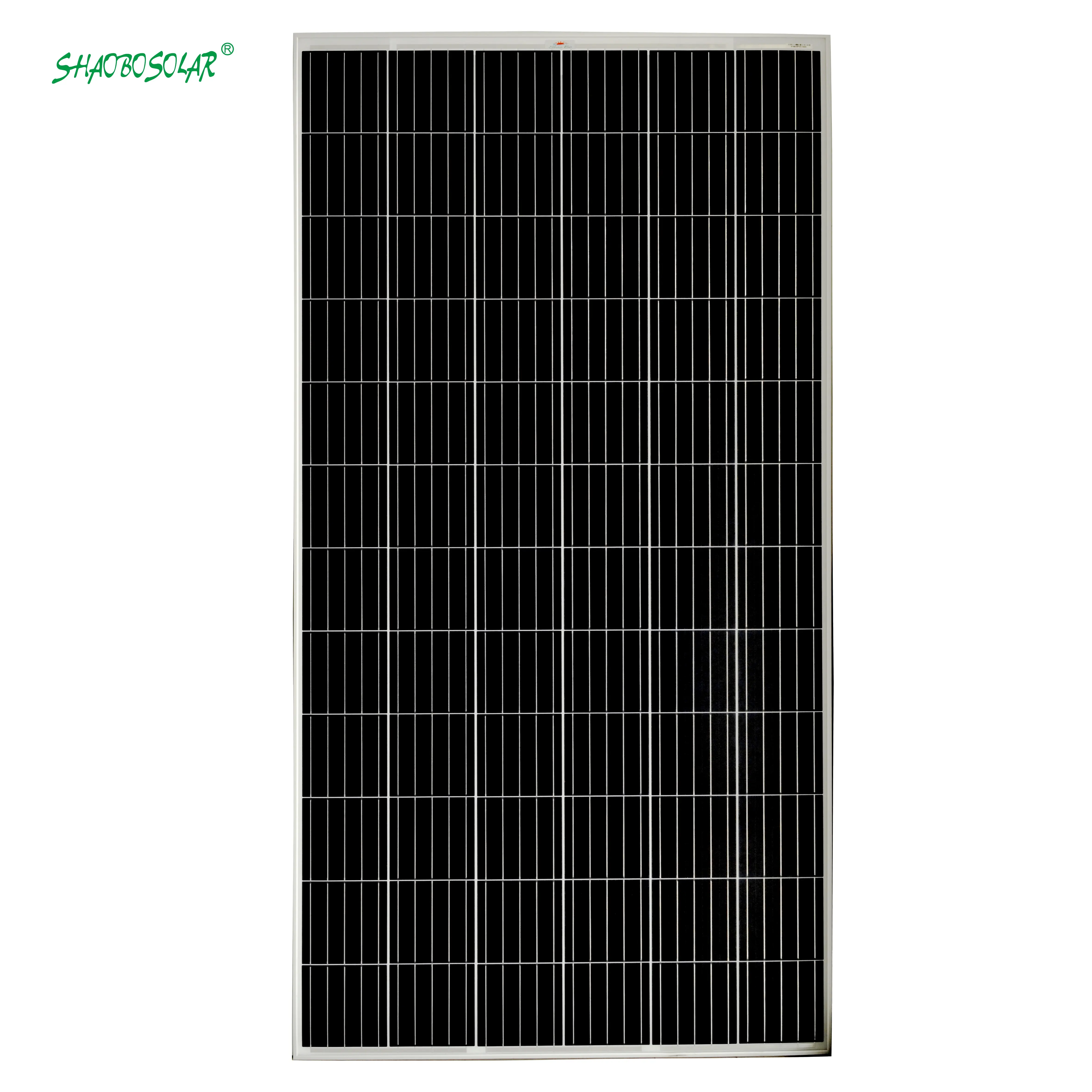
For commercial operators and utility-scale project developers, maximizing the energy yield per square meter is the primary driver for ROI. The SBM6-144-540 High Power Half-Cut Mono Solar PV Module is engineered specifically to address this need, offering a high-wattage output of 540W within a streamlined footprint. By utilizing advanced monocrystalline silicon and half-cut cell architecture, this module minimizes internal resistance and optimizes performance even in challenging environmental conditions. Whether you are upgrading industrial rooftops or deploying massive ground-mount arrays, understanding the technical value and procurement logic behind these high-efficiency panels is essential for long-term energy stability and cost-effectiveness.

The SBM6-144-540 series leverages half-cut cell technology to solve one of the most persistent problems in photovoltaic engineering: internal resistive power loss. By cutting traditional solar cells in half, the current flowing through each cell is reduced, which exponentially lowers the heat generated and reduces the risk of hotspots. This architectural shift not only increases the overall cell efficiency but also significantly extends the operational lifespan of the module by reducing thermal stress on the silicon wafers.
Beyond thermal management, the 144-cell series configuration combined with three bypass diodes ensures that the module remains productive even during partial shading events. In a standard full-cell panel, a small amount of shade can disproportionately drop the output of the entire string. However, the half-cut design allows the unshaded portion of the panel to continue generating power, making it an ideal choice for commercial environments where HVAC units or structural parapets may cast intermittent shadows.

Industrial solar deployments are often exposed to extreme weather, requiring materials that can withstand mechanical stress without degrading. The SBM6-144-540 is constructed with high-transmittance low-iron tempered glass, which maximizes the number of photons reaching the silicon cells while providing a rigid shield against the elements. The robust aluminum alloy frame provides the necessary structural integrity to handle high wind loads and heavy snow accumulation.
When planning a large-scale installation, the choice of module affects the entire Balance of System (BOS) cost. The SBM6-144-540 supports a maximum system voltage of 1500V. This high-voltage capability allows engineers to design longer strings, which directly reduces the total amount of DC wiring required and decreases the number of combiner boxes needed. For the procurement manager, this translates to lower material costs and faster installation timelines.
Compatibility is another critical factor. These modules are designed to integrate seamlessly with major global inverter brands and advanced mounting systems. By optimizing the power density, operators can achieve a faster payback period compared to standard mono panels. The "0 to +5W" power tolerance ensures that every delivered panel meets or exceeds the 540W rating, eliminating the risk of underperforming components in a synchronized array.
| Comparison Feature | Standard Mono Panel | Half-Cut Mono (540W) | Operational Impact |
|---|---|---|---|
| Energy Yield | Baseline | 15-20% Increase | Higher kWh per m² |
| Shade Tolerance | Moderate | High Performance | Reduced losses in partial shade |
| Thermal Loss | Standard | Significantly Lower | Extended cell lifespan |
| BOS Cost | Standard | Optimized (1500V) | Lower wiring and hardware costs |
| ROI Period | Standard | Faster Payback | Higher efficiency, lower cost |
Procuring high-capacity modules requires more than just comparing a china solar panel price; it requires an evaluation of manufacturing consistency and quality control. HeBei ShaoBo Photovoltaic Technology Co., Ltd. operates a 30,000 square meter facility with five dedicated solar module production lines. This scale allows for a consistent annual output of 800-1000MW, ensuring that large-scale projects receive uniform batches of panels with precise power tolerances.
Reliability is guaranteed through strict factory testing of every panel. By focusing on the integration of high-transmittance glass and precision aluminum framing, the company ensures that the theoretical efficiency of the half-cut cells is realized in real-world field conditions. For buyers, this means a reduction in maintenance overhead and a more predictable energy generation curve over the 25-year typical lifespan of the system.
The industry is moving toward higher power densities to reduce the land-use footprint of solar farms. The transition from 400W-class to 540W+ modules represents a shift toward "intelligent" energy harvesting. Future installations will likely see a deeper integration of real-time monitoring platforms that can track the precise yield of each module, allowing for predictive maintenance and optimized grid injection.
For businesses looking to hedge against rising energy costs, the move toward high-efficiency monocrystalline modules is a strategic necessity. By prioritizing modules with superior shade tolerance and high-voltage compatibility, companies can future-proof their infrastructure, making it easier to expand capacity or integrate with emerging battery storage technologies as they become more commercially viable.
Half-cut cells reduce the current flowing through each cell, which significantly lowers internal resistance and heat. This results in higher efficiency, better performance in partial shade, and a longer overall operational lifespan.
Yes, they can be used in residential systems, although their size (2279x1134mm) is typically optimized for commercial or industrial rooftops where space is available to maximize power density.
A higher system voltage (1500V vs 1000V) allows for longer strings of panels, which reduces the amount of wiring and the number of combiner boxes needed, lowering the overall Balance of System (BOS) costs.
Low-iron glass has higher light transmittance compared to standard glass, allowing more photons to reach the silicon cells, which directly increases the power output of the module.
Absolutely. With a maximum load rating of 5400Pa and a robust aluminum alloy frame, these modules are designed to withstand heavy snow loads and high wind pressure.
This means the module is guaranteed to produce at least 540W, but it may produce up to 545W, ensuring you never get a panel that underperforms its rated specification.
Optimizing your energy infrastructure requires a balance of high-efficiency technology and reliable manufacturing. The SBM6-144-540 series provides the technical foundation for a sustainable, high-yield energy future.


Hit enter to search or ESC to close