The world’s appetite for clean energy is growing, and rightly so. We’re seeing a massive push towards sustainability, and rightly so. But talk is cheap. What really matters is reliable, affordable power, and that’s where the 350 watt solar panel comes in. It’s not some futuristic tech anymore; it’s the workhorse of distributed generation, powering homes, businesses, and increasingly, critical infrastructure. I’ve spent the last decade on rooftops and in fields, wrestling with these things, and I can tell you, they’ve come a long way. We're moving beyond just 'green' and focusing on practical, scalable energy solutions, and a 350 watt solar panel is a cornerstone of that reality.
The beauty of the 350 watt panel isn’t just its output; it's its versatility. It hits that sweet spot between power and manageability. It's enough juice to make a real difference for a household or small business, but not so bulky that it's a nightmare to install. I’ve seen crews install hundreds of these in a week, and that efficiency translates to lower costs. It's a tangible step towards energy independence, and that's something people are actively seeking. The demand for panels like this is soaring, driven by everything from government incentives to a growing awareness of climate change.
Frankly, it's a game changer for remote areas. Forget stringing power lines across miles of wilderness; a handful of these, coupled with battery storage, can provide a reliable power source where it's needed most. We're seeing more and more off-grid communities, farms, and even disaster relief operations relying on this type of setup. It's not just about convenience; it’s about providing essential services and improving quality of life. The key is finding panels that can withstand the elements, and that's where quality really shines.

The Global Rise of 350 watt solar panel
The global solar energy market is exploding, and 350 watt solar panels are at the heart of that growth. According to the International Energy Agency (IEA), solar power is now the cheapest form of electricity in many parts of the world. We're looking at a projected increase in solar capacity of over 600% in the next decade. It’s a phenomenal growth rate. And it’s not just about large-scale solar farms; it's about empowering individuals and communities with their own clean energy sources. This demand is driven by a combination of factors: falling costs, government incentives, and a growing awareness of the environmental impact of fossil fuels.
I've seen firsthand how this plays out on the ground. I've worked with contractors who are completely booked out for months, installing residential systems. I’ve seen communities in developing countries gain access to electricity for the first time, thanks to these panels. It’s a tangible impact. The challenge now is to scale up production and deployment sustainably, ensuring quality and affordability along the way. The need for robust and efficient 350 watt solar panel solutions has never been greater.
Defining the 350 watt Solar Panel
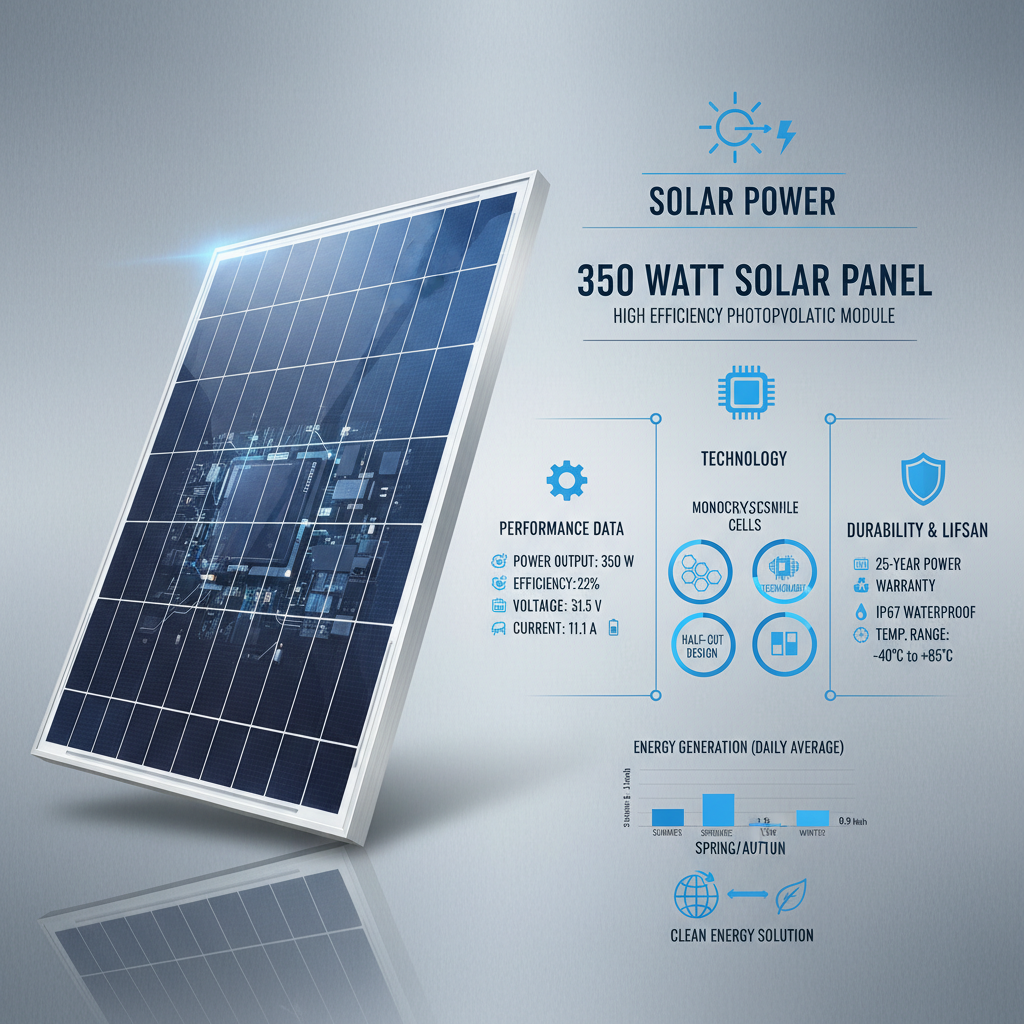
Simply put, a 350 watt solar panel is a photovoltaic (PV) module designed to convert sunlight directly into electricity. The “350 watt” refers to its peak power output under standard test conditions – essentially, a clear, sunny day at a specific temperature. It’s a standardized measurement that allows us to compare the performance of different panels. But it’s important to remember that “peak power” is just that – a peak. Real-world output will vary depending on factors like sunlight intensity, panel angle, temperature, and shading.
These panels are typically constructed with silicon cells, covered with a protective glass layer and encased in an aluminum frame. They’re designed to withstand harsh weather conditions, including rain, snow, and hail. Modern panels also incorporate features like bypass diodes to minimize the impact of shading. They are fundamental building blocks in renewable energy systems and connect directly into inverters which convert the DC electricity to AC electricity usable in our homes and businesses.
What’s fascinating is how this technology has become so accessible. Just a few years ago, solar power was largely confined to niche applications. Now, you see these panels on rooftops everywhere, powering everything from lights and appliances to electric vehicles. This accessibility is a testament to the advancements in manufacturing and materials science.
Key Characteristics of a Quality 350 watt Solar Panel
When I'm on a job site, the first thing I look for is durability. These panels need to last for 25 years or more, so you need a robust construction. Look for panels with high-quality glass, a sturdy aluminum frame, and a reputable warranty. I've seen too many cheap panels delaminate or crack after just a few years of exposure to the elements. That’s money down the drain. A good panel has to withstand wind loads, snow accumulation, and temperature swings.
Efficiency is another crucial factor. A more efficient panel will produce more power per square foot, which is especially important if you have limited roof space. Efficiency ratings typically range from 17% to 22%. Higher efficiency often comes at a higher price, so it’s about finding the right balance for your needs. I often tell clients: don’t chase the highest efficiency if it means stretching your budget too thin.
Temperature coefficient is something most homeowners don’t think about, but it’s critical. Solar panels actually become less efficient as they get hotter. A lower temperature coefficient means the panel will maintain more of its power output in hot weather. In a hot climate, this can make a significant difference in your overall energy production. I always recommend checking this spec before making a purchase.
Practical Applications & Performance Metrics
The applications for a 350 watt solar panel are broad. For a typical household, you’d likely need between 10 and 20 of these panels to meet your energy needs. They can be used for grid-tied systems, where excess power is fed back into the utility grid, or for off-grid systems, where power is stored in batteries. I’ve seen everything from small cabin setups to entire homes powered solely by solar.
When evaluating performance, it’s important to look beyond just the wattage. Consider the panel’s voltage and current output, as well as its efficiency under various conditions. Also, pay attention to the inverter’s specifications – it needs to be compatible with the panels you’re using. We measure performance metrics like Peak Power (Pmax), Open-Circuit Voltage (Voc), Short-Circuit Current (Isc), and Fill Factor. These metrics provide a comprehensive assessment of the panel’s overall performance.
350 watt solar panel Performance Comparisons
Global Deployment and Real-World Impact
We’re seeing significant deployments in sunny regions like California, Australia, and the Middle East, but also increasingly in countries with less ideal climates. Technological advancements are making panels more effective in diffuse light conditions. I’ve personally worked on projects in cloudy climates where we’ve been able to generate substantial power.
Beyond residential use, 350 watt solar panels are becoming critical for commercial and industrial applications. We’re seeing businesses reducing their carbon footprint and saving money on energy costs by installing rooftop solar arrays. Agricultural applications are also growing – powering irrigation systems, greenhouses, and livestock operations. These panels are opening up a world of possibilities.
Advantages and Long-Term Value Proposition
The biggest advantage, obviously, is cost savings. Once the initial investment is made, the cost of electricity from solar is essentially free. And with rising energy prices, that savings can be substantial. But it’s not just about money. It’s about energy independence, reducing your carbon footprint, and contributing to a more sustainable future. It's about having peace of mind knowing you're not reliant on a fluctuating energy market.
Long-term, these panels represent a solid investment. They increase property value, provide a hedge against rising energy costs, and contribute to a cleaner environment. I've seen homeowners recoup their investment within 5-7 years, and then enjoy decades of free electricity. That's a pretty compelling value proposition.
There’s also a growing social impact. Providing affordable electricity to communities that lack access can improve healthcare, education, and economic opportunity. That’s something I find incredibly rewarding.
Future Trends and Innovations in 350 watt solar panel Technology
We’re seeing a lot of exciting developments in solar technology. Perovskite solar cells are showing promising efficiency gains and could potentially lower manufacturing costs. Bifacial panels, which generate power from both sides, are becoming increasingly popular. And advancements in battery storage are making off-grid systems more reliable and affordable. These advancements will only drive down costs and increase the adoption of solar energy.
Digitalization is also playing a role. Smart inverters and monitoring systems are allowing homeowners and businesses to optimize their energy production and consumption. And with the rise of the Internet of Things (IoT), we’re seeing more interconnected and automated solar energy systems. The future is about integrated, intelligent energy solutions.
I predict we'll see a push towards more sustainable manufacturing processes, reducing the environmental impact of panel production. We'll also see more emphasis on recycling and end-of-life management for solar panels. It's not enough to just generate clean energy; we need to ensure the entire lifecycle of the panel is environmentally responsible.
Table Summarizing 350 watt solar panel Technology and Performance
| Technology Type |
Efficiency Range (%) |
Cost (per Watt) |
Durability (Years) |
| Monocrystalline Silicon |
18-22 |
$0.70 - $0.90 |
25-30 |
| Polycrystalline Silicon |
16-18 |
$0.60 - $0.80 |
20-25 |
| Thin-Film (CdTe) |
11-13 |
$0.50 - $0.70 |
15-20 |
| Bifacial Silicon |
18-24 |
$0.80 - $1.10 |
25-30 |
| Perovskite (Emerging) |
20-25 (Lab) |
$0.40 - $0.60 (Potential) |
10-15 (Current) |
| Heterojunction Technology (HJT) |
21-24 |
$0.90 - $1.20 |
25-30 |
FAQS
Most 350 watt solar panels are warrantied for 25 years, but they often continue to produce power for much longer, albeit at a reduced capacity. Typical degradation is around 0.5% per year, meaning after 25 years, you can still expect to get around 85% of the original output. Quality construction and proper installation are key to maximizing lifespan. I've seen panels operating efficiently for over 30 years, but that’s not the norm.
The amount of roof space needed depends on your energy consumption and the efficiency of the panels. A typical 350 watt panel is roughly 65 inches by 39 inches, or about 18 square feet. For a standard household, you might need 15-20 panels, requiring roughly 270-360 square feet of unobstructed roof space. It is important to consult a qualified solar installer to assess your specific needs.
This is a growing concern. Currently, most end-of-life solar panels end up in landfills, but recycling technology is improving. The goal is to recover valuable materials like silicon, aluminum, and glass. There are companies specializing in solar panel recycling, but it’s not yet widely available or cost-effective. Industry efforts are focused on developing more robust and scalable recycling solutions.
Yes, although they won’t produce as much power as in sunny climates. Modern solar panels can still generate electricity even on cloudy days, utilizing diffuse sunlight. The output will be significantly reduced, but it’s still a valuable source of energy. Newer panel technologies, like those with improved low-light performance, are especially effective in cloudy conditions.
Monocrystalline panels are made from a single crystal of silicon, making them more efficient and generally more expensive. Polycrystalline panels are made from multiple silicon crystals, making them slightly less efficient but also more affordable. The difference in efficiency is typically a few percentage points. For most residential applications, either type will work well.
Shading can significantly reduce the output of a solar panel system. Even partial shading can impact the performance of an entire string of panels. Modern panels often include bypass diodes to minimize the impact of shading, but it’s still best to avoid shading whenever possible. Careful site assessment and system design are crucial to maximizing energy production.
Conclusion
The 350 watt solar panel is far more than just a piece of technology; it’s a cornerstone of a more sustainable energy future. From its versatility and affordability to its long-term value and environmental benefits, it’s a solution that empowers individuals, businesses, and communities alike. It’s not a silver bullet, but it’s a crucial piece of the puzzle in transitioning to a cleaner energy economy.
Looking ahead, we'll continue to see innovation in panel technology, battery storage, and smart grid integration. Investing in these solutions is not just good for the environment; it’s good for the economy and for future generations. If you're considering solar, do your research, find a reputable installer, and take the leap – you won't regret it. To learn more about how a 350 watt solar panel can work for you, visit our website today.