When searching for reliable pv panel suppliers, businesses and homeowners prioritize a balance between energy conversion efficiency, long-term durability, and scalable pricing. The solar market has shifted toward high-efficiency monocrystalline technology, demanding suppliers who can provide certified modules capable of maintaining peak output under diverse climatic conditions.
The challenge for many procurement teams lies in verifying the actual performance of solar cells against manufacturer claims. Factors such as busbar configuration, glass transmittance, and frame rigidity significantly impact the total return on investment (ROI) for residential and commercial solar system installations.
This guide provides a technical analysis of how to evaluate pv panel suppliers, comparing monocrystalline and polycrystalline options, and detailing the specifications necessary for achieving maximum energy harvest and system stability in large-scale deployments.

1Evaluating Core Capabilities of PV Suppliers

Selecting the right pv panel suppliers requires a deep dive into their manufacturing capacity and R&D focus. A professional supplier should not only provide the physical modules but also comprehensive technical documentation, including flash test reports and degradation curves. For instance, HeBei ShaoBo Photovoltaic Technology Co., Ltd. focuses on crystalline silicon research, ensuring that their production lines can handle both monocrystalline and polycrystalline requirements.
Reliability is often found in suppliers who maintain a large-scale production footprint. With a factory covering 30,000 square meters and multiple production lines, the ability to scale from residential kits to utility-scale power plants becomes a critical advantage. This prevents supply chain bottlenecks during the expansion of solar arrays.
Furthermore, a supplier's commitment to social responsibility and clean energy sustainability reflects their long-term stability in the market. Companies that align their business goals with global carbon reduction targets tend to invest more in efficiency improvements, such as optimizing busbar configurations to reduce internal resistance.
2Technical Advantages of Monocrystalline Technology
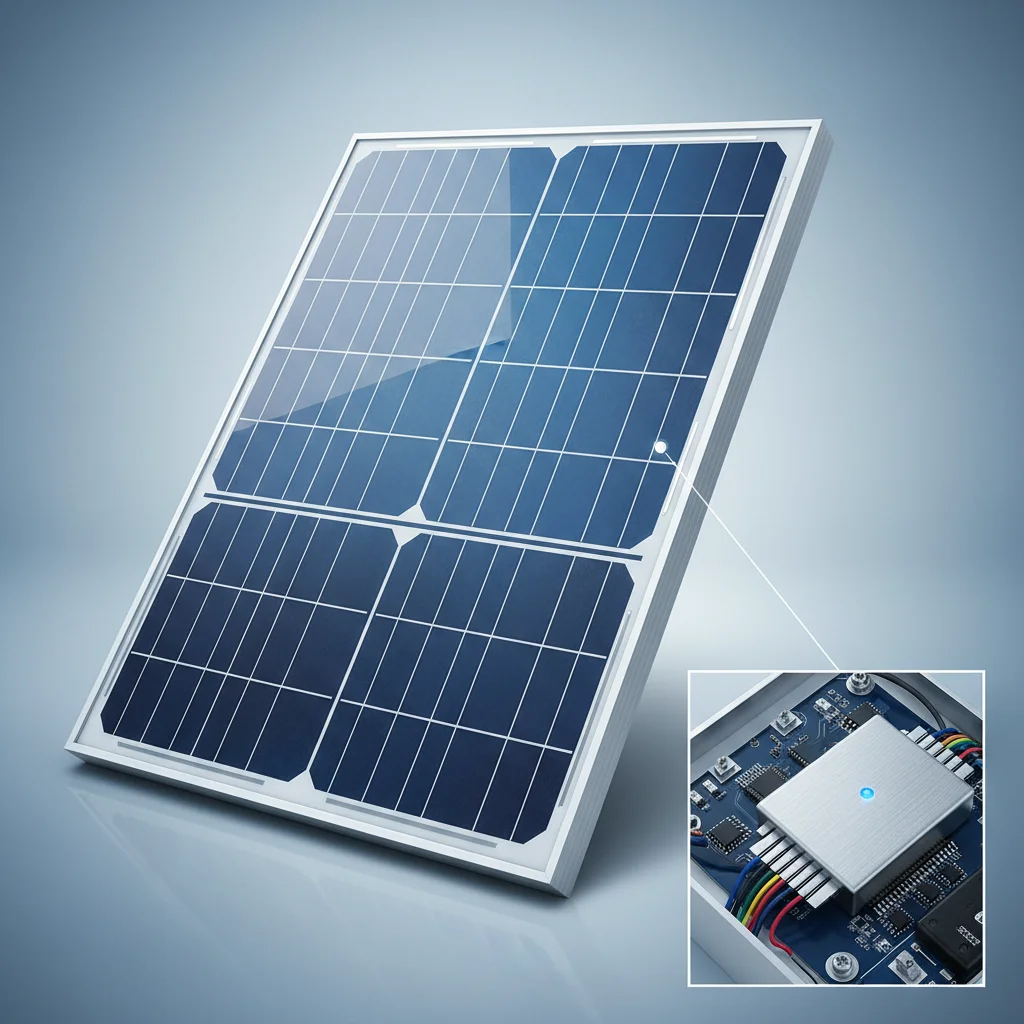
Monocrystalline solar panels are characterized by their single-crystal silicon structure, which allows electrons more room to move, resulting in higher efficiency. Advanced modules, such as the 60-cell Monocrystalline Solar PV Module, utilize optimized busbar configurations (5bb/9bb) to maximize the energy harvest from each cell. This reduces the distance electrons must travel, thereby minimizing energy loss.
From a construction standpoint, the use of 3.2mm tempered glass and heavy-duty aluminium alloy frames ensures that these panels can withstand extreme mechanical stress. This is essential for installations in regions prone to hail or high wind loads, where structural integrity is as important as electrical output.
The integration of high-transmittance, low-iron glass further increases the amount of sunlight reaching the silicon cells. By maximizing photon absorption, these modules achieve a higher peak power (Pmax) of up to 320W, making them more space-efficient than their polycrystalline counterparts.
3Application Scenarios for Solar PV Modules
The versatility of modern PV modules allows them to be deployed across various environments. In residential settings, compact monocrystalline panels are ideal for limited roof spaces where maximizing wattage per square meter is the primary goal. These systems typically integrate with standard MC4 connectors for rapid, secure deployment.
For commercial and industrial (C&I) installations, the focus shifts toward long-term stability and maintenance. Large-scale arrays require modules with a high maximum system voltage (up to 1500V) to reduce cabling costs and energy loss during transmission from the array to the inverter.
In utility-scale power plants, the ability of pv panel suppliers to provide batch traceability and digital quality control documentation is vital. This ensures that every module in a multi-megawatt project meets the same strict performance standards, preventing "weak links" in the string that could drag down overall system yield.
4Performance Metrics and Energy Yield Analysis
Analyzing the efficiency of a solar module involves more than looking at the peak power. The Open Circuit Voltage (Voc) and Short Circuit Current (Isc) provide the necessary data to design compatible string layouts. For a 320W module, a Voc of 38.16V and Vmp of 31.9V are standard benchmarks for calculating the number of panels per string.
Real-world performance is also heavily influenced by external factors. The ability of a panel to withstand hail speeds of 23m/s and loads of 5400Pa ensures that the energy yield does not drop due to micro-cracks in the cells, which often occur in lower-quality modules during extreme weather events.
pv panel suppliers Performance Metrics
When comparing suppliers, the "Low-Light Performance" metric is often the deciding factor. Monocrystalline cells generally outperform polycrystalline cells during cloudy days or early morning/late evening hours, leading to a more consistent daily energy production curve and a faster return on investment.
5Procurement Criteria and Quality Certification
Procurement teams should evaluate pv panel suppliers based on their quality control protocols. A robust process includes DC withstand tests and hail impact certifications. Modules that lack these certifications risk premature failure, especially in harsh coastal or mountainous environments where salt mist and wind pressure are prevalent.
The logistical capability of the supplier is another overlooked criterion. The ability to coordinate streamlined shipping for large PV projects—potentially involving thousands of modules—requires experienced management teams and efficient inventory tracking systems to avoid project delays.
Finally, assess the warranty terms. A professional supplier will offer guarantees not just on the product hardware, but on the linear power output over 20-25 years. This assurance reflects the supplier's confidence in the purity of their silicon and the quality of their encapsulation process.
6Future Trends in Photovoltaic Manufacturing
The industry is moving toward higher cell densities and bifacial technology, which allows panels to capture sunlight from both the front and back. This trend is particularly beneficial for ground-mounted arrays with reflective surfaces, potentially increasing the total energy yield by 5% to 15%.
Innovation in busbar technology continues to evolve, with multi-busbar (MBB) designs becoming the standard. By further reducing the distance electrons travel, manufacturers can increase efficiency while making the cells more resilient to micro-cracks, as the current has more paths to follow if one area is damaged.
Digitalization of the supply chain is also playing a key role. Real-time monitoring of stock levels and batch traceability allows buyers to ensure they receive consistent modules from the same production run, which is critical for maintaining voltage uniformity across a large solar array.
7Comparison: Mono-crystalline vs. Poly-crystalline
The choice between monocrystalline and polycrystalline panels depends on the specific constraints of the project. While monocrystalline panels offer superior efficiency and a sleek aesthetic, polycrystalline panels may be more cost-effective for massive installations where land area is not a limiting factor.
However, the gap in price is narrowing, while the gap in performance remains significant. The following table highlights the key trade-offs that procurement teams must consider when selecting modules from different pv panel suppliers.
| Metric | Standard Polycrystalline | Our Mono-crystalline | Impact on Project |
|---|---|---|---|
| Conversion Efficiency | Lower | Significantly Higher | Less land/roof area required |
| Space Requirement | High Area Needed | Compact Footprint | Lower installation costs |
| Low-Light Performance | Average | Excellent | Higher winter energy yield |
| Long-term ROI | Slow Return | Accelerated Return | Better financial viability |
| Life Cycle Value | Moderate | Premium Value | Higher resale/asset value |
| Temp. Coefficient | Higher Loss | Optimized Stability | Consistent summer output |
Ultimately, for those seeking maximum reliability and the highest possible energy density, monocrystalline modules are the recommended choice. They provide a more stable power generation profile and a significantly better long-term value proposition.
Frequently Asked Questions
Conclusion
Selecting the right pv panel suppliers is a strategic decision that affects the energy yield and financial viability of any solar project for decades. By prioritizing monocrystalline technology with optimized busbar configurations and verified mechanical durability, investors can ensure a higher ROI and lower operational risks.
For procurement teams and engineers seeking high-efficiency solar modules that meet strict international standards, detailed product specifications and availability can be reviewed at www.shaobosolar.com.