
HighEfficiency house solar power system Solutions for Ghana

HighEfficiency house solar power system Solutions for Ghana

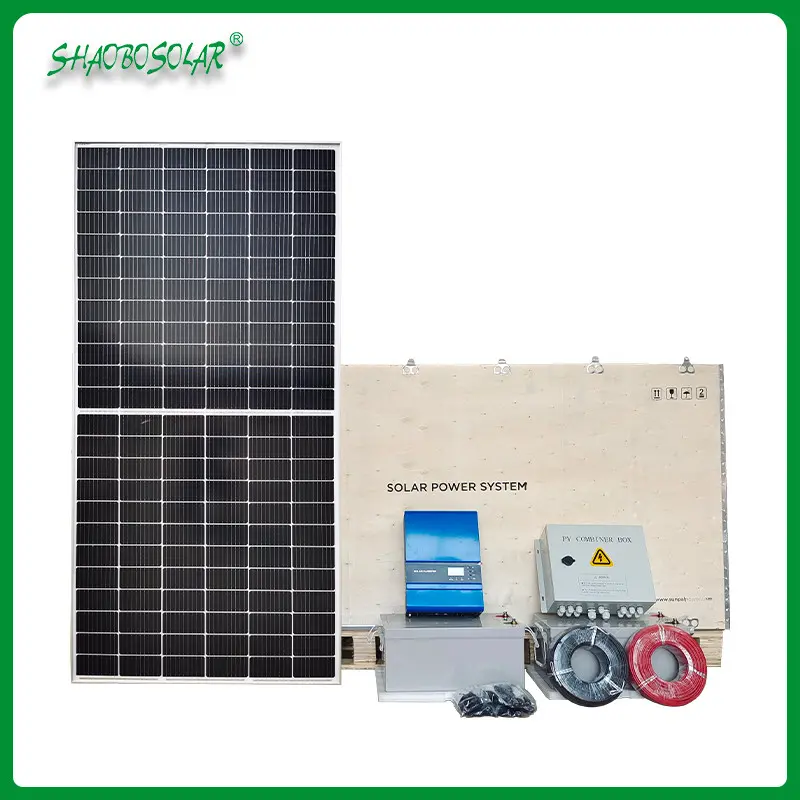
High-Efficiency house solar power system Solutions for Ghana

Empowering Ghanaian homes and businesses with Tier-1 photovoltaic technology to combat energy instability and reduce electricity costs.

The Current State of Solar Energy in Ghana

Analyzing the transition from grid-dependence to renewable autonomy in Accra and beyond.

Ghana possesses immense solar irradiation potential, yet many regions still face frequent "Dumsor" (power outages), driving a massive surge in the demand for reliable solar panels. The market is currently shifting from small-scale lighting kits to comprehensive residential energy systems.

Economic volatility and rising utility tariffs have made the adoption of monocrystalline solar panels more attractive for urban homeowners in Ghana, as these offer higher efficiency per square meter, maximizing limited roof space in densely populated areas.

Despite the growth, there is a critical need for high-durability equipment that can withstand Ghana's high humidity and tropical heat, pushing the industry toward components with superior temperature coefficients and corrosion resistance.
Evolution of Solar Technology in West Africa

From basic electrification to intelligent energy management.

Market Development History

In the early 2010s, the Ghanaian market was dominated by low-cost polycrystalline solar panel installations, which provided basic electricity to rural villages but suffered from lower efficiency and faster degradation in extreme heat.

Between 2015 and 2020, a technical pivot occurred. The introduction of PERC technology allowed for a transition toward the mono solar panel, significantly increasing the energy yield for commercial enterprises in Kumasi and Tema.

Since 2021, the focus has shifted toward systemic integration, where the emphasis is no longer just on the panel, but on the entire ecosystem, including lithium storage and smart hybrid inverters for seamless power transitions.

Future Development Trends

N-Type TOPCon Dominance

We expect a total migration toward N-type cells to further reduce LID (Light Induced Degradation), essential for Ghana's intense equatorial sunlight.

Bifacial Energy Capture

The adoption of bifacial modules will rise, utilizing reflected light from sandy or light-colored surfaces common in Northern Ghana to boost output by up to 15%.

Micro-grid Decentralization

Integration of IoT-enabled monitoring will allow Ghanaian communities to share energy across localized micro-grids, optimizing distribution and reducing waste.

Industry Trends and Future Outlook

Strategic projections for the photovoltaic landscape in the next 5 years.

High-Temperature Resilience
Development of modules with ultra-low temperature coefficients to maintain peak efficiency during Ghana's hottest months.
Energy Storage Synergy
Integration of LiFePO4 batteries with monocrystalline solar panels for 24/7 power stability.
Smart Monitoring AI
Cloud-based AI platforms to predict energy production based on Ghanaian weather patterns and optimize load.
Agricultural PV Integration
Agrivoltaics allowing crops to grow under solar arrays, optimizing land use for Ghanaian farmers.

Industry Outlook

Based on search trend analysis, there is a growing preference for "off-grid" and "hybrid" solutions in Ghana, indicating a shift away from traditional net-metering toward total energy autonomy.

The next 3-5 years will see a democratization of high-end monocrystalline solar panels as manufacturing costs drop, making luxury power stability accessible to the middle-class Ghanaian market.

Localized Solar Applications in Ghana

Real-world deployments solving Ghana's unique energy challenges.

01. Residential Energy Security in Accra

Deploying full house solar power system kits for urban villas to eliminate reliance on diesel generators during grid failures.

02. Rural Healthcare Electrification

Using mono solar panel arrays to power vaccine refrigerators and basic medical equipment in remote clinics across the Volta Region.

03. Agri-Business Irrigation Systems

Implementing solar-powered water pumps in the Northern Region to enable year-round farming, reducing operational costs for local cooperatives.

04. Commercial Office Continuity

Installing large-scale solar panels for SMEs in Kumasi to ensure uninterrupted business operations and digital connectivity.

05. Educational Campus Lighting

Installing polycrystalline solar panel street lighting and classroom power for rural schools to extend learning hours safely.

Brand Story

Global Development Journey of Hebei Shaobo Photovoltaic Technology Co., Ltd.

Founding Vision

Established with the goal of bridging the energy gap by providing industrial-grade PV components to emerging markets.

Technical Breakthrough

Pioneered high-efficiency cell integration, reducing degradation rates for tropical climates like Ghana.

Market Expansion

Successfully expanded distribution networks across Africa, ensuring local technicians have access to Tier-1 hardware.

Quality Standardization

Achieved global certifications (IEC/CE), ensuring every module shipped to Ghana meets rigorous international safety standards.

Sustainable Future

Committed to a circular economy, focusing on recyclable materials and long-term warranties for solar infrastructure.

Ghana Solar Installation FAQ

Expert answers to the most common questions from Ghanaian customers.

Which is better for Ghana: monocrystalline solar panels or polycrystalline?

For most Ghanaian users, monocrystalline is superior due to higher efficiency in limited spaces and better performance in high-heat environments compared to polycrystalline options.

How long does a typical house solar power system last in West Africa?

Our Tier-1 panels generally have a linear performance warranty of 25 years, while the battery life depends on the chemistry (Lithium typically lasts 10+ years).

Can a mono solar panel work during the rainy season in Ghana?

Yes, while production drops during heavy cloud cover, modern mono-PERC cells are designed to capture diffused light more effectively than older technologies.

What size solar panels are needed for a 3-bedroom house in Accra?

Depending on your load (AC, fridge, etc.), a system ranging from 3kW to 5kW is typical, usually consisting of 6-12 high-efficiency modules.

How do I protect my solar equipment from dust and harmattan?

Regular cleaning of the panel surface during the harmattan season is crucial to prevent dust buildup from reducing energy absorption.

Are polycrystalline solar panel installations still viable for rural farms?

Yes, they remain a cost-effective choice for large-area applications where space is not a constraint and budget is the primary driver.

Get Your Customized Solar Quote

Ready to switch to clean energy? Our experts are ready to design the perfect system for your location in Ghana.

Contact Us Now

If you are interested in our products, you can choose to leave your information here, and we will be in touch with you shortly.