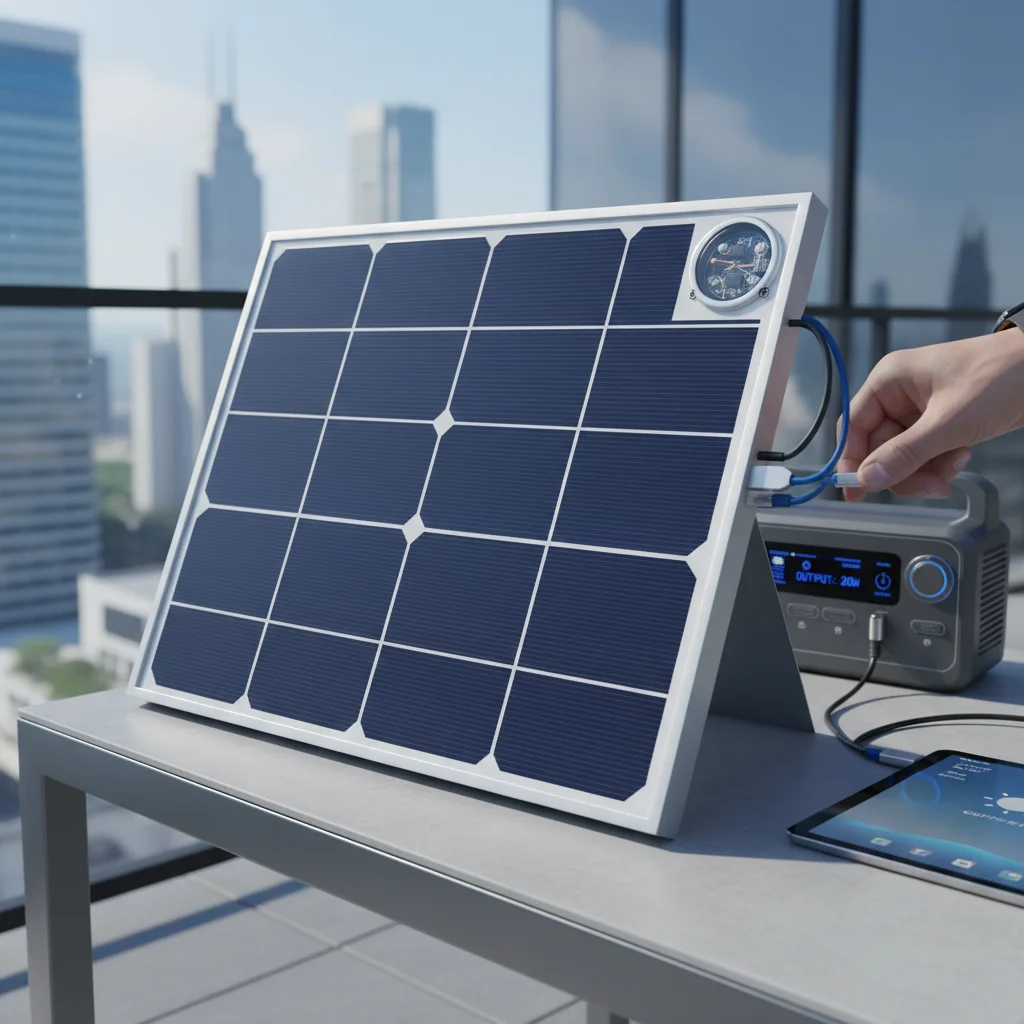
Selecting the right partner among global solar panel manufacturing companies is no longer just about comparing price per watt, but about analyzing the long-term reliability of the photovoltaic (PV) architecture. As the transition to renewable energy accelerates, the technical gap between standard assembly and high-performance engineering has become a critical decision point for commercial and residential developers.
The complexity of modern solar systems requires a deep understanding of cell efficiency, encapsulation durability, and mechanical resilience against extreme weather. For those navigating the procurement process, distinguishing between monocrystalline and polycrystalline technologies is only the first step in ensuring a sustainable energy return on investment.
This guide examines the industrial standards that define top-tier manufacturing, the technical specifications that drive real-world power output, and the strategic factors that should guide the selection of a PV module supplier to ensure a 25-year operational lifespan.

Understanding the Industrial Landscape of PV Manufacturing

The global supply chain for solar modules has evolved from simple component assembly to highly integrated high-tech ecosystems. Modern manufacturing involves a precise sequence of crystalline silicon research, wafer slicing, cell fabrication, and final module encapsulation, where even a minor deviation in purity can lead to significant degradation over time.
Professional manufacturers now operate large-scale facilities—often exceeding 20,000 square meters—utilizing multiple automated production lines to handle both monocrystalline and polycrystalline variations. This scale allows for rigorous quality control, including multi-ply performance testing for each module to verify that the actual output matches the rated specifications.
Beyond assembly, the industry is shifting toward a social responsibility model, focusing on the sustainability of clean energy. Companies that integrate R&D with mass production are better positioned to optimize the balance between cost-efficiency and the environmental footprint of the manufacturing process itself.
Core Technical Indicators for High-Efficiency Modules
When evaluating the output of a solar module, the primary focus should be on the convergence of cell efficiency and module efficiency. For instance, a cell efficiency of 19.2% must be supported by an advanced encapsulation system to maintain a module efficiency around 16.4% to 17.5% in real-world operating conditions.
Mechanical resilience is equally vital. Top-tier modules are engineered to withstand wind loads of 2400Pa and snow loads of 5400Pa, utilizing high-transparent low-iron tempered glass and UV-resistant EVA. This prevents micro-cracks in the silicon cells, which are a leading cause of premature power drop-off.
Furthermore, the use of anodized aluminum frames provides essential anti-corrosion properties. This ensures that the module remains structurally sound when exposed to humid or saline environments, supporting the industry-standard 25-year performance guarantee.
Strategic Application Scenarios for Crystalline Silicon Panels
The deployment of solar technology varies significantly depending on the energy demand and available space. Residential installations often prioritize monocrystalline panels due to their higher efficiency and smaller footprint, making them ideal for limited roof spaces where maximizing wattage per square meter is the primary goal.
In contrast, commercial and industrial (C&I) projects often utilize a hybrid approach. Polycrystalline modules may be deployed in large-scale ground-mount arrays where space is abundant and the lower cost per watt provides a more attractive ROI, provided the overall system capacity meets the energy requirements.
For power generation systems, the integration of the full solar system—including optimized cabling with MC4 compatible connectors and IP65-rated junction boxes—is crucial. These components ensure that the electrical characteristics, such as the Maximum Power Voltage (Vmp) and Short-circuit Current (Isc), are efficiently transmitted to the inverter with minimal loss.
Benchmarking Module Efficiency and Power Output
Performance benchmarking requires analyzing the delta between Standard Test Conditions (STC) and Nominal Operating Cell Temperature (NOCT). While a module may be rated at 165W under STC, its actual performance is influenced by the temperature coefficient of Pmax, typically around -0.40%/°C.
The following data illustrates the typical performance gap between generic industry benchmarks and high-specification modules across key operational metrics. High-spec modules generally show superior stability in voltage tolerance and lower degradation rates.
Solar Module Performance Metrics
As shown in the metrics, the ability to maintain a tight power measurement tolerance (0~+3%) is a hallmark of professional manufacturing. This precision ensures that system designers can accurately predict energy yields without having to over-provision the number of panels.
Procurement Framework for Commercial Solar Systems
Procuring PV modules at scale requires a shift from viewing panels as a commodity to viewing them as long-term infrastructure. The first step in a professional procurement framework is the verification of third-party certifications, such as TUV Rheinland, which validates that the rated power and efficiency are not merely theoretical.
Buyers should evaluate the manufacturer's production capacity and quality control systems. A factory with five or more dedicated production lines and a proven annual output (e.g., 800-1000MW) typically offers better stability in product consistency and more reliable lead times for large projects.
Additionally, the procurement process must include a review of the "Mechanical Characteristics" sheet. Confirming the glass thickness (e.g., 3.2mm) and the frame material (Anodized Aluminum Alloy) ensures the system can survive the specific environmental challenges of the installation site.
Future Trajectories in Photovoltaic Material Science
The industry is currently witnessing a transition toward N-type cells and TOPCon technology, which aim to push module efficiency beyond the 20% threshold. While polycrystalline panels remain viable for cost-sensitive projects, the trend is leaning heavily toward high-purity monocrystalline silicon to maximize energy density.
Innovation in encapsulation materials is also expected to reduce Potential Induced Degradation (PID). The integration of more advanced backsheets and high-transmission glass may further increase the light absorption rate, effectively raising the power output without increasing the physical size of the module.
Furthermore, the industry is exploring the synergy between PV modules and smart monitoring systems. Future installations will likely integrate AI-driven diagnostics at the module level to identify underperforming cells in real-time, shifting maintenance from a reactive to a predictive model.
Comparative Analysis for Supplier Selection
To finalize a supplier choice, stakeholders should compare technical profiles across different product tiers. The decision should be based on the specific trade-off between initial capital expenditure (CAPEX) and the projected Levelized Cost of Energy (LCOE).
The following table provides a decision-matrix based on common industry configurations, allowing procurement officers to align product specifications with project goals.
| Configuration Type | Primary Material | Ideal Application | Key Performance Driver |
|---|---|---|---|
| High-Efficiency Series | Monocrystalline | Urban Residential | Max Wattage/m2 |
| Economy Series | Polycrystalline | Rural Ground-Mount | Lowest CAPEX |
| Industrial Heavy-Duty | Reinforced Mono | Coastal Installations | Corrosion Resistance |
| Off-Grid Systems | Mixed Crystalline | Remote Telecom | Voltage Stability |
| Commercial Roof | High-Trans Glass | Warehouse Top | Low Thermal Loss |
| Utility Scale | Large Format Poly | Solar Farms | LCOE Optimization |
Ultimately, the most reliable path to a successful solar investment is partnering with a manufacturer that balances innovation with rigorous testing. For those evaluating specific technical parameters or seeking a customized PV solution, detailed product information is available through www.shaobosolar.com.
Frequently Asked Questions
Conclusion
The selection of solar panel manufacturing companies is a strategic decision that impacts the energy security and financial viability of any photovoltaic project. By focusing on verified efficiency metrics, mechanical resilience, and a transparent procurement framework, developers can mitigate the risks of degradation and maximize their energy yield.
As the industry moves toward higher efficiency and smarter integration, the gap between basic components and engineered solutions continues to widen. For those seeking high-performance monocrystalline or polycrystalline modules that meet international standards, exploring the technical capabilities available at www.shaobosolar.com can provide the necessary foundation for a sustainable energy future.