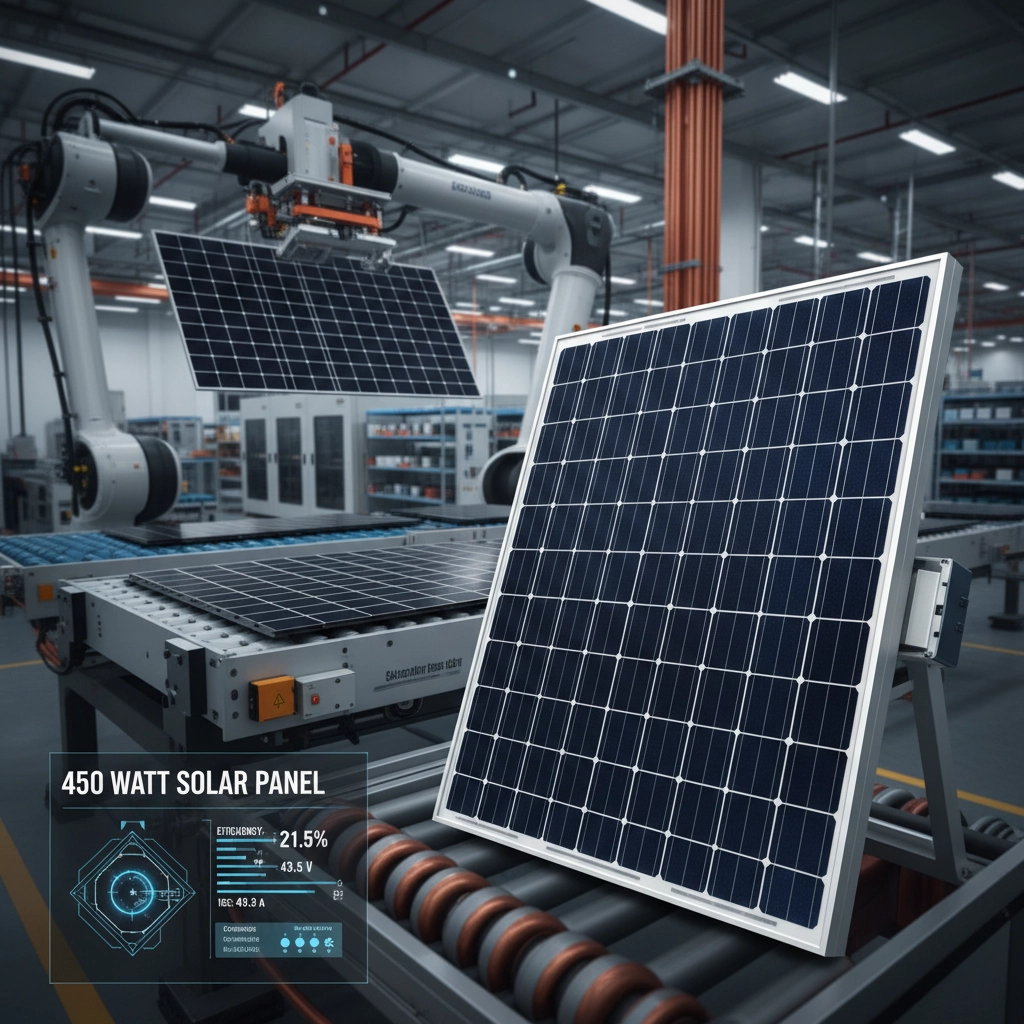
The global transition toward renewable energy has accelerated the demand for high-efficiency power generation, placing the 450 watt solar panel at the center of modern residential and commercial energy strategies. As energy costs fluctuate and the urgency of carbon neutrality grows, these high-capacity modules offer a balanced intersection of surface area efficiency and raw power output, making them a preferred choice for those seeking to maximize their energy harvest.
Understanding the technical nuances of a 450 watt solar panel is no longer just for engineers; it is essential for homeowners and business operators who want to reduce their reliance on traditional grids. By optimizing the conversion of sunlight into electricity, these panels help mitigate the challenges of limited roof space while ensuring that high-draw appliances and industrial machinery can be powered sustainably.
Ultimately, investing in a 450 watt solar panel represents more than just a purchase of hardware; it is a commitment to long-term energy independence. From reducing monthly utility bills to increasing property value, the deployment of high-wattage monocrystalline technology is paving the way for a decentralized energy future where every rooftop becomes a miniature power plant.
Global Industry Context of 450 Watt Solar Panels
The global energy landscape is currently undergoing a seismic shift, driven by international mandates such as the Paris Agreement and the push for Net Zero emissions. Within this context, the 450 watt solar panel has emerged as a benchmark for mid-to-large scale installations. Data from the International Energy Agency (IEA) suggests that the adoption of higher-wattage modules significantly reduces the "soft costs" of installation—meaning fewer panels are required to meet the same energy target, leading to lower labor and mounting hardware expenses.
Despite this progress, many regions still struggle with "energy poverty" or outdated grid infrastructures that cannot handle intermittent loads. The deployment of 450W modules addresses this by providing a high power-to-footprint ratio, allowing remote industrial zones and rural communities to establish robust microgrids without requiring massive tracts of land, thus bridging the gap between urban luxury and rural necessity.
Defining the 450 Watt Solar Panel Standard
In simple terms, a 450 watt solar panel is a photovoltaic module capable of producing 450 watts of direct current (DC) electricity under Standard Test Conditions (STC), which typically involve an irradiance of 1000W/m² and a cell temperature of 25°C. Unlike lower-wattage legacy panels, these units often utilize PERC (Passivated Emitter and Rear Cell) technology or Half-Cut cell designs to minimize energy loss and maximize photon capture.
This specific wattage is significant because it sits at the "sweet spot" for versatility. It is powerful enough to satisfy the needs of a modern energy-efficient home but remains manageable in size for standard mounting rails and roof structures. By concentrating more energy production into a single unit, the 450W standard reduces the complexity of wiring and the number of failure points in a solar array.
Beyond the technical specs, this standard responds to a humanitarian need for rapid electrification. In disaster-recovery zones or temporary medical clinics, deploying a few 450 watt solar panel units can quickly establish a reliable power source for critical refrigeration and lighting, proving that high-efficiency industrial hardware has profound social applications.
Core Components and Efficiency Factors
The performance of a 450 watt solar panel is primarily dictated by the purity of its silicon. Most high-output modules utilize Monocrystalline silicon, which allows electrons more room to move, resulting in higher efficiency rates. This material choice ensures that the panel can maintain high output even during slightly overcast conditions, which is critical for maintaining a steady energy flow.
Another critical factor is the integration of half-cut cell technology. By splitting the cells in a 450 watt solar panel in half, the electrical current is reduced, which significantly lowers internal resistive losses. Furthermore, this design improves the panel's shade tolerance; if the bottom half of the panel is obscured by a shadow, the top half continues to produce power at full capacity.
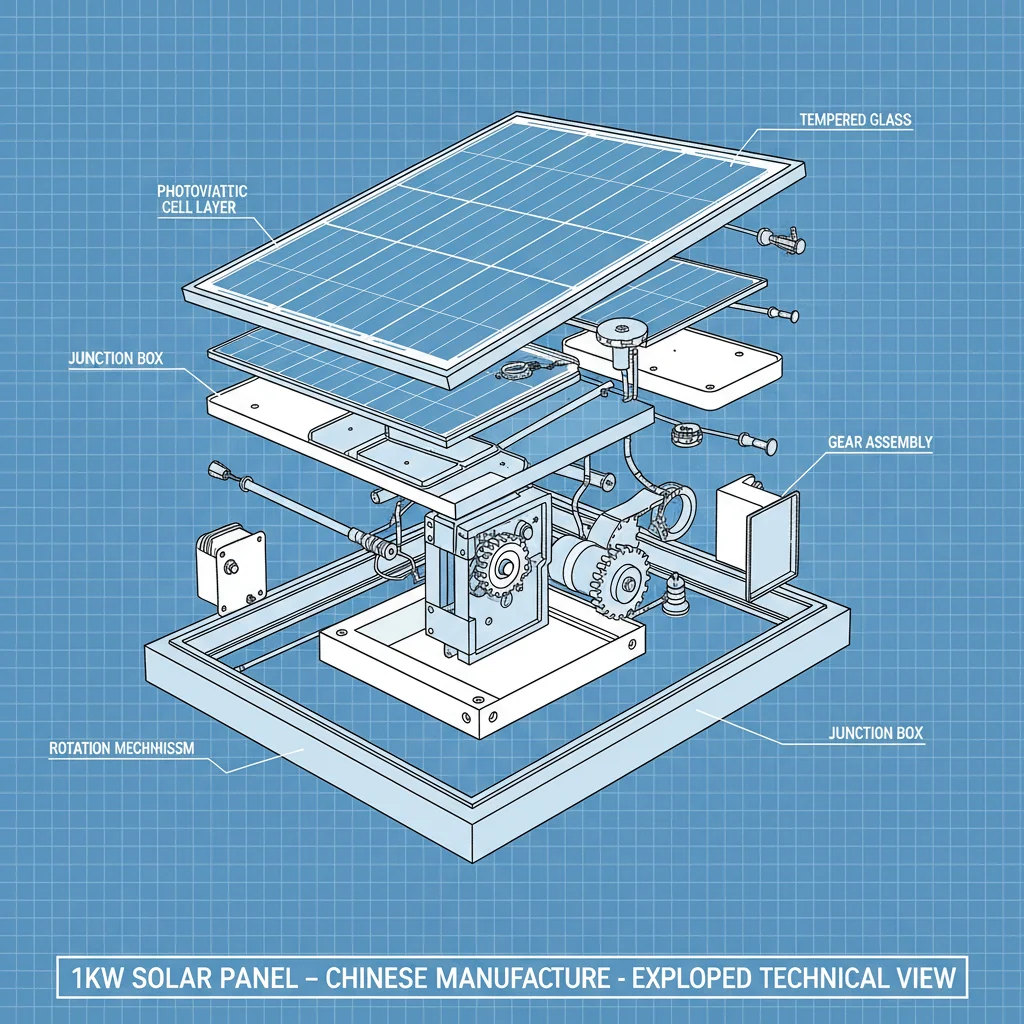
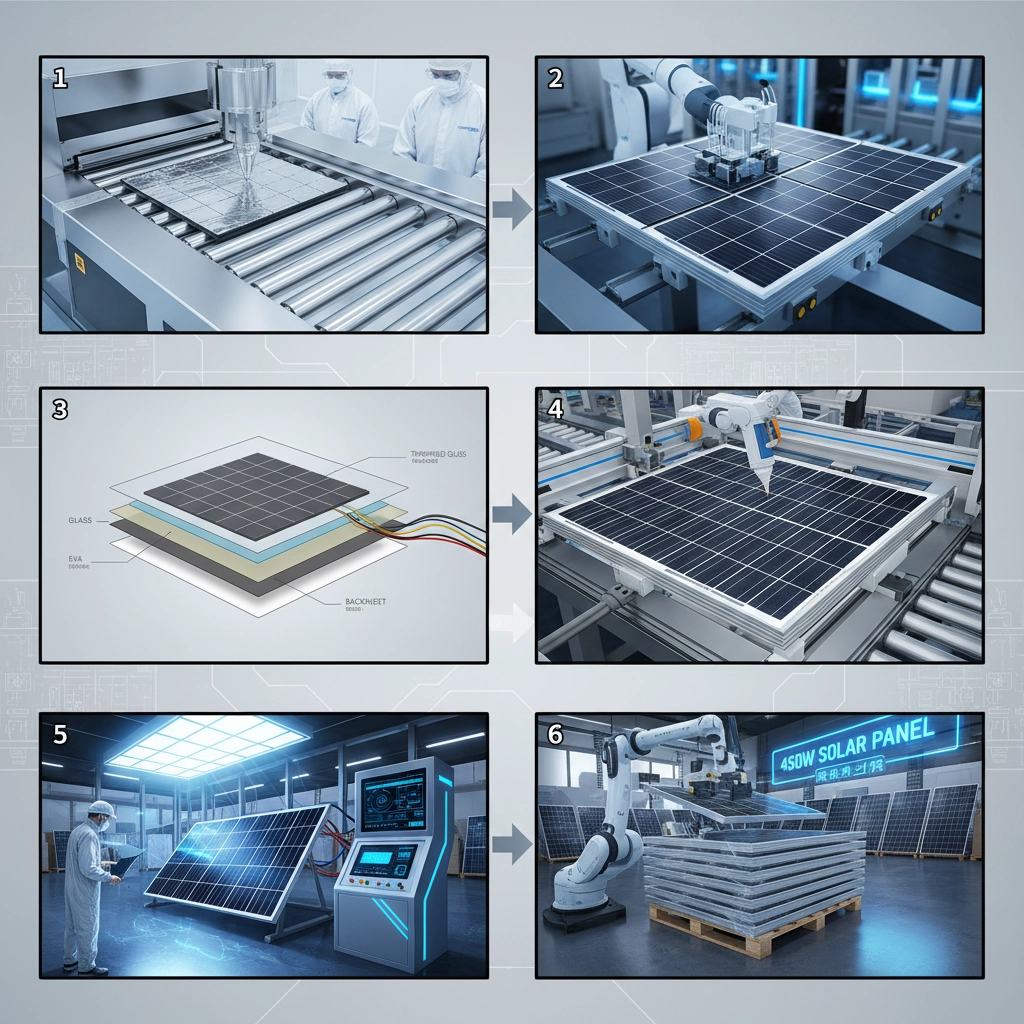
Durability and scalability are further enhanced by the use of tempered anti-reflective glass and anodized aluminum frames. These components protect the delicate silicon wafers from hail, wind loads, and corrosion, ensuring that the 450 watt solar panel can operate for 25 to 30 years with minimal degradation, thereby securing the long-term return on investment.
Comparative Performance and Scalability
When comparing the 450W module to traditional 300W or 350W panels, the primary advantage is the reduction in Balance of System (BOS) costs. To achieve a 4.5kW system, a user would need ten 450W panels instead of fifteen 300W panels. This directly translates to 33% less racking material and significantly reduced labor time during the installation phase.
Furthermore, the scalability of these modules allows them to transition seamlessly from residential rooftops to massive commercial solar farms. Because they offer a higher energy density, developers can generate more megawatts per acre, which is a critical metric when land costs are high or available space is limited by geographic constraints.
Energy Efficiency Analysis of 450 Watt Solar Panel Variants
Global Applications and Use Cases
In real-world contexts, the 450 watt solar panel is widely deployed across diverse sectors. In the agricultural industry, "Agrivoltaics" combines farming with solar energy; 450W panels are mounted high above crops, providing shade for plants while generating power for irrigation systems. This dual-use approach maximizes land productivity and provides farmers with a secondary revenue stream.
In remote industrial zones, such as mining sites in Australia or telecom towers in Sub-Saharan Africa, these panels provide the necessary power to run satellite communications and monitoring equipment. Because these areas are often prone to extreme weather, the structural integrity and high output of the 450W module ensure that critical infrastructure remains operational without the need for expensive and polluting diesel generators.
Long-Term Economic and Environmental Value
The tangible benefits of adopting a 450 watt solar panel extend beyond the immediate reduction in electricity bills. From a logical standpoint, the ROI (Return on Investment) is accelerated due to the high energy density, allowing users to reach their "break-even" point years faster than those using lower-efficiency modules. This financial stability creates a sense of security for homeowners and business owners alike.
Emotionally, the shift to high-capacity solar power fosters a sense of dignity and autonomy. For communities in developing nations, owning a 450 watt solar panel means the ability to study at night, store vaccines in refrigerators, and connect to the global digital economy. It is a transition from dependency to empowerment.
Environmentally, the long-term value is immeasurable. By replacing coal-fired power with high-efficiency silicon modules, thousands of tons of CO2 are prevented from entering the atmosphere. The reliability of the 450W standard ensures that the energy transition is not just a temporary trend, but a permanent shift toward a sustainable, low-carbon civilization.
Future Innovations in High-Wattage Modules
The evolution of the 450 watt solar panel is moving toward "Bifacial" technology, where panels can capture sunlight on both the front and the back. By utilizing reflected light from the ground (albedo), bifacial modules can increase the total energy yield of a 450W rated panel by an additional 10-30%, depending on the surface reflectivity.
We are also seeing the integration of N-type TOPCon (Tunnel Oxide Passivated Contact) cells, which further reduce recombination losses and improve performance in high-temperature environments. This digital transformation in material science means that future versions of the 450 watt solar panel will be even more efficient, lighter, and more resistant to degradation.
Finally, the push toward "Circular Economy" policies is leading to better recycling methods for silicon and aluminum. Future modules will not only be high-performing but will be designed for easy disassembly, ensuring that the materials used in today's 450W panels become the raw materials for the next generation of green energy.
Technical Specification and Performance Analysis of 450W Solar Modules
| Module Technology |
Conversion Efficiency |
Temperature Coefficient |
Warranty Period |
| Mono-PERC 450W |
20.5% - 21.5% |
-0.34%/°C |
25 Years |
| Half-Cut Mono 450W |
21.0% - 22.1% |
-0.33%/°C |
25 Years |
| Bifacial 450W |
21.5% - 23.0% |
-0.31%/°C |
30 Years |
| N-Type TOPCon 450W |
22.5% - 24.0% |
-0.29%/°C |
30 Years |
| Poly-Silicon 450W |
17.0% - 18.5% |
-0.39%/°C |
20 Years |
| Thin-Film 450W |
15.0% - 17.0% |
-0.22%/°C |
20 Years |
FAQS
Yes, it is highly suitable. While 450W panels are slightly larger than older 300W models, they are designed to fit standard mounting rails. Their higher efficiency means you need fewer panels to achieve your energy goals, which actually saves roof space and reduces the number of penetrations required for mounting.
To achieve a 5kW (5000W) system, you would typically need 11 to 12 panels. Specifically, 5000 divided by 450 equals approximately 11.11. Most installers would suggest 12 panels to account for real-world efficiency losses and to ensure the system meets the target output consistently throughout the year.
Monocrystalline 450W panels are made from a single crystal structure, offering higher efficiency and better performance in low-light conditions. Polycrystalline panels are made from multiple silicon crystals, which makes them cheaper to produce but less efficient, requiring more surface area to produce the same 450 watts of power.
Yes, they do. While solar panels produce the most energy in direct sunlight, they can still generate electricity from diffuse light on cloudy days. High-efficiency 450W panels, especially those with PERC or N-type technology, are specifically designed to capture a broader spectrum of light, maintaining a functional output even when the sun is obscured.
Most professional-grade 450W panels come with a linear power warranty of 25 to 30 years. While they don't "stop working" after this period, their efficiency slowly degrades (usually by about 0.5% per year). After 25 years, a quality panel will still produce roughly 80-85% of its original rated power.
It is generally discouraged. Mixing panels with different wattages or current (Ampere) ratings in the same string can lead to "mismatch loss," where the entire string is limited by the weakest panel. If you must mix them, it is best to use multiple MPPT trackers or separate strings to ensure each group of panels operates at its own optimal point.
Conclusion
The 450 watt solar panel represents a pivotal advancement in photovoltaic technology, offering an ideal blend of high energy density, structural durability, and cost-effectiveness. By reducing the physical footprint required for power generation and lowering overall installation costs, these modules make sustainable energy accessible for both urban households and remote industrial operations. From the technical advantages of half-cut cells to the economic benefits of reduced BOS costs, the 450W standard is a cornerstone of the modern green energy transition.
Looking forward, as we integrate bifacial and TOPCon technologies, the value proposition of high-wattage modules will only increase. For anyone seeking to transition to renewable energy, prioritizing high-efficiency components is the most effective way to ensure long-term energy security and environmental stewardship. We encourage you to evaluate your energy needs and invest in technology that balances today's performance with tomorrow's sustainability. Visit our website: www.shaobosolar.com